
Knox in the Wild · Alaska, year four
Kavik Was Never Supposed to End Before Knox Grew Up
Sue Aikens, Chena, and the strange grief of realizing a place can end before a childhood does.
The text came while I was sitting at my desk in Texas. Two words.
Camp sold.
For a few years Sue had been telling us Kavik River Camp might sell. We heard it once, then it didn’t sell, and after a while I started thinking of her as the girl who cried wolf. Or, more accurately, the girl who beat the wolf and saved the day, because that is a good deal closer to her record. So my first reaction wasn’t grief. It was here we go again, and I was already doing the math on when Knox and I could get back to the North Slope. Then more details came through, and this time it was real.
Kavik River Camp was no longer in Sue Aikens’ possession. Those are her words, and they are the right ones to use. The details of how and why belong to her. She has said publicly that it breaks her heart, and I am not going to take something that happened to my friend and turn it into a piece of gossip simply because people know her from television.
The only part of this story that is mine to tell is what happened next.
In September, my nine-year-old son and I flew back to Alaska. Not to Kavik this time, but to Chena. Somewhere between a dark cabin, a burned loaf of banana bread, a white wolf, a stack of old dishes, and a nine-year-old who thinks sacred family artifacts belong in the regular dish cabinet, I realized I had been grieving the wrong thing. I thought I was grieving a place. What I was actually grieving was a version of my son, and if I’m being truthful, a version of myself too.
Kavik was never supposed to end before Knox grew up.
At least that is what I had apparently decided without ever saying it out loud. The problem is that children don’t wait for us to finish the story before they start becoming someone else.
Two places. Four summers.
Kavik River Camp
North Slope. Three summers, reached by bush plane.
Chena
Outside Fairbanks. Our September 2026 visit, reached by truck.
A schematic of the journey, not a map to the private cabin.
The Children Who Leave Without Going Anywhere
There are things nobody puts in the parenting brochure. People warn you about sleep, diapers, daycare, sports schedules, college tuition. They tell you the years go fast, which is one of those phrases everybody nods at and nobody understands until it has already happened to them. What they don’t explain is that you never really raise one child. You raise a whole succession of them.
There is newborn Knox, baby Knox, toddler Knox, preschool Knox, primary-school Knox, and the nine-year-old sitting beside me now. Someday there will be teenage Knox, adult Knox, maybe married Knox, maybe father Knox. They will all answer to the same name. They will all be my son. And somehow I will never see the precise moment when one leaves and the next one takes his place.
You never really raise one child. You raise a whole succession of them.
There is no ceremony for it. The toddler does not pack a tiny suitcase and announce that his services are no longer required. You don’t wake up one morning knowing yesterday was the final day your child would mispronounce that word, crawl into your lap that particular way, hold your hand without thinking about it, or believe with complete sincerity that you know the answer to everything. They just change while you’re making breakfast, answering emails, feeding cattle, trying to get somewhere on time. Then a photograph comes up on your phone from three years ago and there he is. Someone you loved more than your own life. Someone you will never see exactly like that again.
Nothing bad happened. That’s the cruelty of it. Everything went right. He grew. That’s what we wanted him to do, and somehow it still hurts.
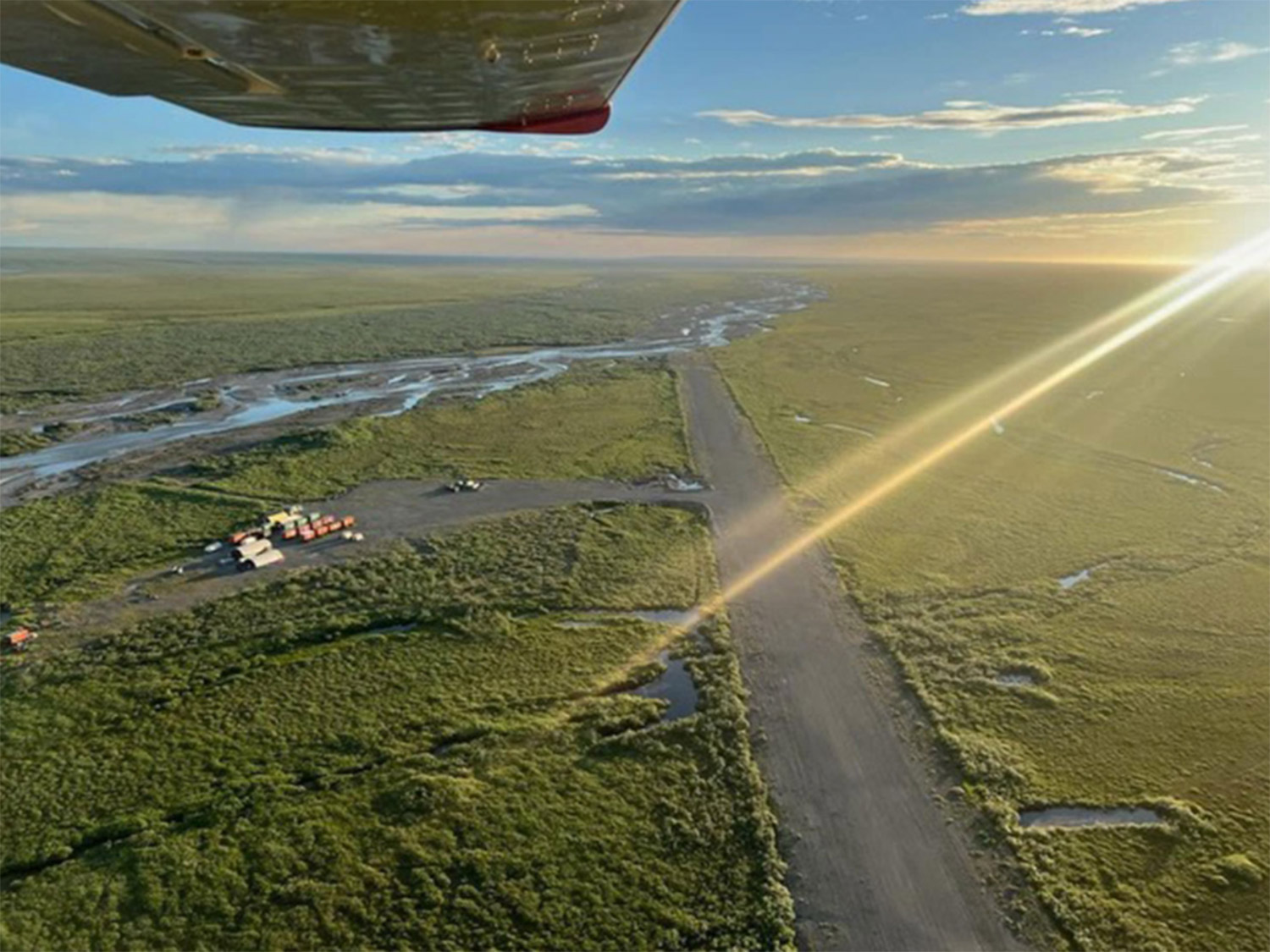
Kavik had become one of the places where I could see those little versions of Knox most clearly. We had three summers there. Six years old. Seven. Eight. The same gravel runway, the same Arctic tundra, the same North Hill in the distance, the same woman waiting for us when the plane landed, and a different boy stepping onto the gravel each time.
I just didn’t notice how much he was changing until there wasn’t going to be another landing.
What Was Kavik, Exactly?
Before we flew north this year, I started asking Knox questions about Kavik. I wasn’t working on an article. I just wanted to know what was actually stored in that nine-year-old brain after three summers in a place most adults will never see. So I asked him to close his eyes, stand outside at Kavik in his mind, and tell me what he heard.
“Mosquitos. Gravel crunching. Plane coming in. River running.” Then, after considering whether the Arctic had anything else to offer: “That’s it.”
I did the same exercise. What I hear is nothing, which is a sweet, sweet sound. No traffic. No phone. No air conditioner running outside. No machinery unless a plane is coming in. Just that enormous quiet of the North Slope. Then, underneath the quiet, I hear Knox’s feet running through the gravel and Sue somewhere off to the side hollering hey dirtbag, or whatever greeting she has selected for the morning.
Gravel was the only sound we shared. He hears gravel. I hear his feet in it.
I asked him what Kavik smelled like, and he said mosquito coils and the dining hall. I said clean, earthy, bland. Not clean like bleach, but clean like wind off the tundra carrying almost nothing with it. What does the ground feel like? “A sponge. Soft, wet and mushy.” I said uneasy, because you go from the solid gravel of the runway, to that strange giving tundra under your boots, to the metal grates that serve as stairs into the container where we slept. What is the first thing you see? “Sue. And the Twinkies.” The Twinkies are the little yellow buildings at camp, for anyone unfamiliar with Kavik vocabulary.
He hears gravel. I hear his feet in it.
Then I asked him what a photograph wouldn’t show. He thought for a while before answering.
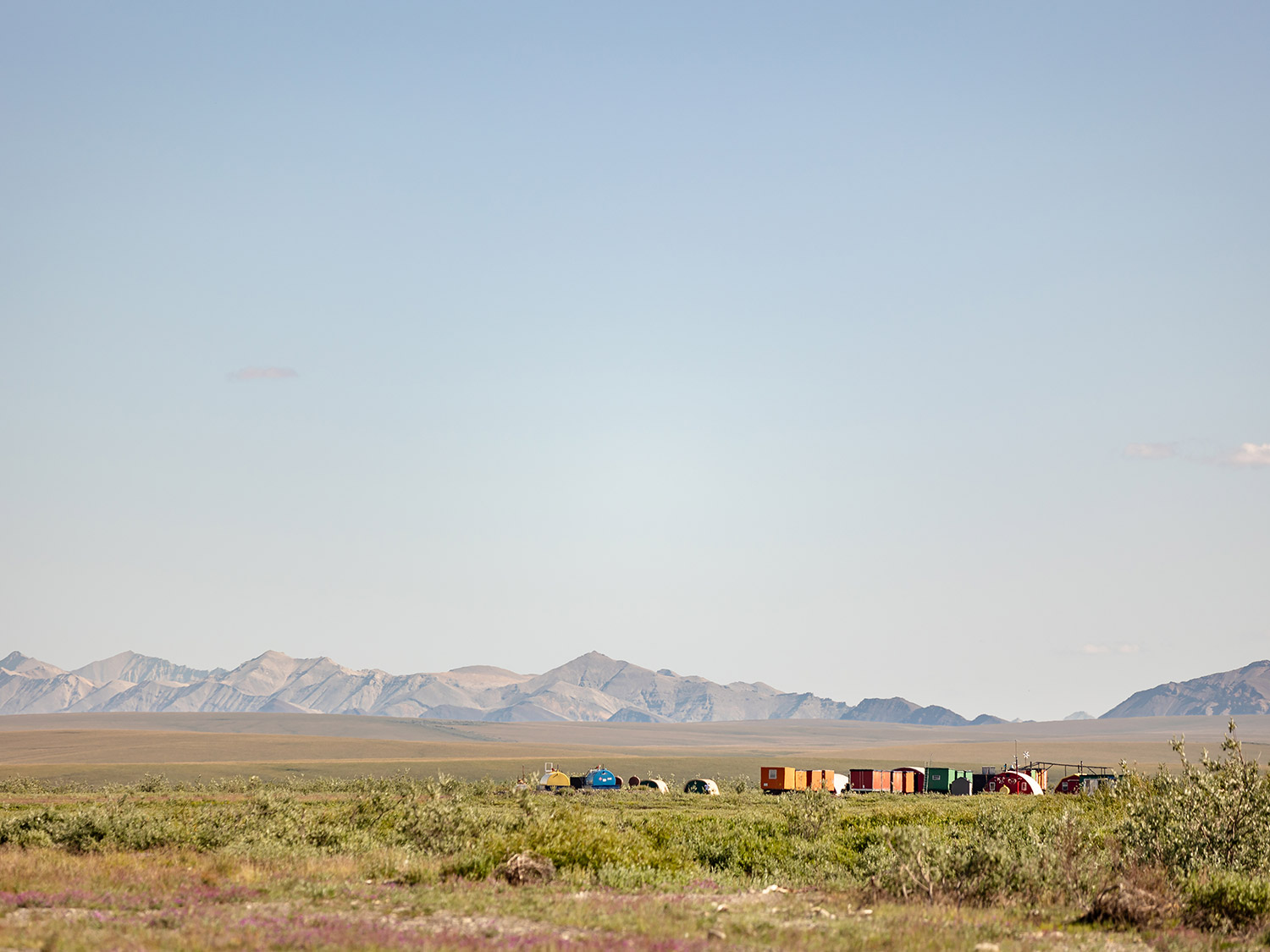
“The north hill and the surroundings as big as they are.”
Exactly. The scale. The fact that you can turn around in a complete circle and see almost nothing human in any direction.
Later, I asked whether he really remembered our first trip when he was six, or whether he only remembered the photographs.
“I remember both.”
It wasn’t the answer I was fishing for. It was better. Photographs do something strange to parents. Eventually you stop knowing whether you remember the child or whether you have simply memorized the evidence that he existed. I know what six-year-old Knox looked like at Kavik because I have thousands of photographs proving it, but I also remember his feet on the gravel. Apparently he remembers them too.
For now.
The Thing I Was Afraid Of
On the plane to Fairbanks, I wrote something down. I was nervous. Not that Chena wouldn’t be wonderful, but that Knox and I would spend the entire week thinking, well, this is good, but it isn’t Kavik.
Kavik forced you into the present partly because there was nothing familiar about it. A charter plane dropped you onto a gravel runway hundreds of miles north of Fairbanks and effectively delivered you to your room. There was no highway, no TSA once you left Fairbanks, no neighbor coming by. Traffic consisted largely of caribou.
We live on a ranch in Texas. I grew up in Indiana. I know woods. Chena has trees, and lots of them, and I worried we would fly all the way to Alaska and feel like we had arrived at a cabin in the woods.
Knox was less existential about the whole thing. I asked what he expected and he predicted, “Forresty. A cabin. A meadow. Big rushing river.” That was the entire forecast.
I wrote time will tell in my notes. Then we landed.
Arriving at a Place You Can’t See
We landed in Fairbanks on Wednesday, September 16, at 7:16 in the evening, and by then Alaska was already getting dark. This was new. Three summers at Kavik and neither Knox nor I had ever really experienced darkness up there. We were used to the midnight sun, where your body says bedtime and the sky politely disagrees.
Sue’s son-in-law Dick picked us up for the two-hour drive into the taiga. It was cold, raining, and dark, and for most of the drive the only light outside the truck was what bounced back from moose warning signs. I have never been a more attentive copilot. Any jet lag disappeared in favor of staring into every ditch with the singular purpose of yelling MOOSE if something stepped out. Dick and I talked while Knox slept in the back, and I don’t think he made it much past the last real lights of Fairbanks.
We crossed the Chena River so many times I eventually stopped counting. Then Dick put on his turn signal and said, “We’re here.” A long muddy driveway appeared in the headlights, then a cabin I recognized from the background of FaceTimes with Sue. She came off the porch wearing a headlamp, Bill tucked under one arm.
“Hey turkey butt.”
It was cold. Damp. Dark. And everything was immediately right. That’s the thing about her. Alaska doesn’t quite become real to us until we’re standing beside Sue.
She showed us our cabin, which had what some people in the lower 48 might call a bank-vault door. Wooden shutters covered the windows, partly because of weather and partly because Alaska contains several things that would happily eat you. There was no electricity. Inside were little magnetic light bars, each about the size of a candy bar, and those, along with the glow from the heater, made up our entire electrical grid after the generator shut down. Then she showed us the bucket. If you need the restroom during the night, use the bucket. Do not go outside. It isn’t safe to wander around in the dark.
Alaska doesn’t quite become real to us until we’re standing beside Sue.
Good information.
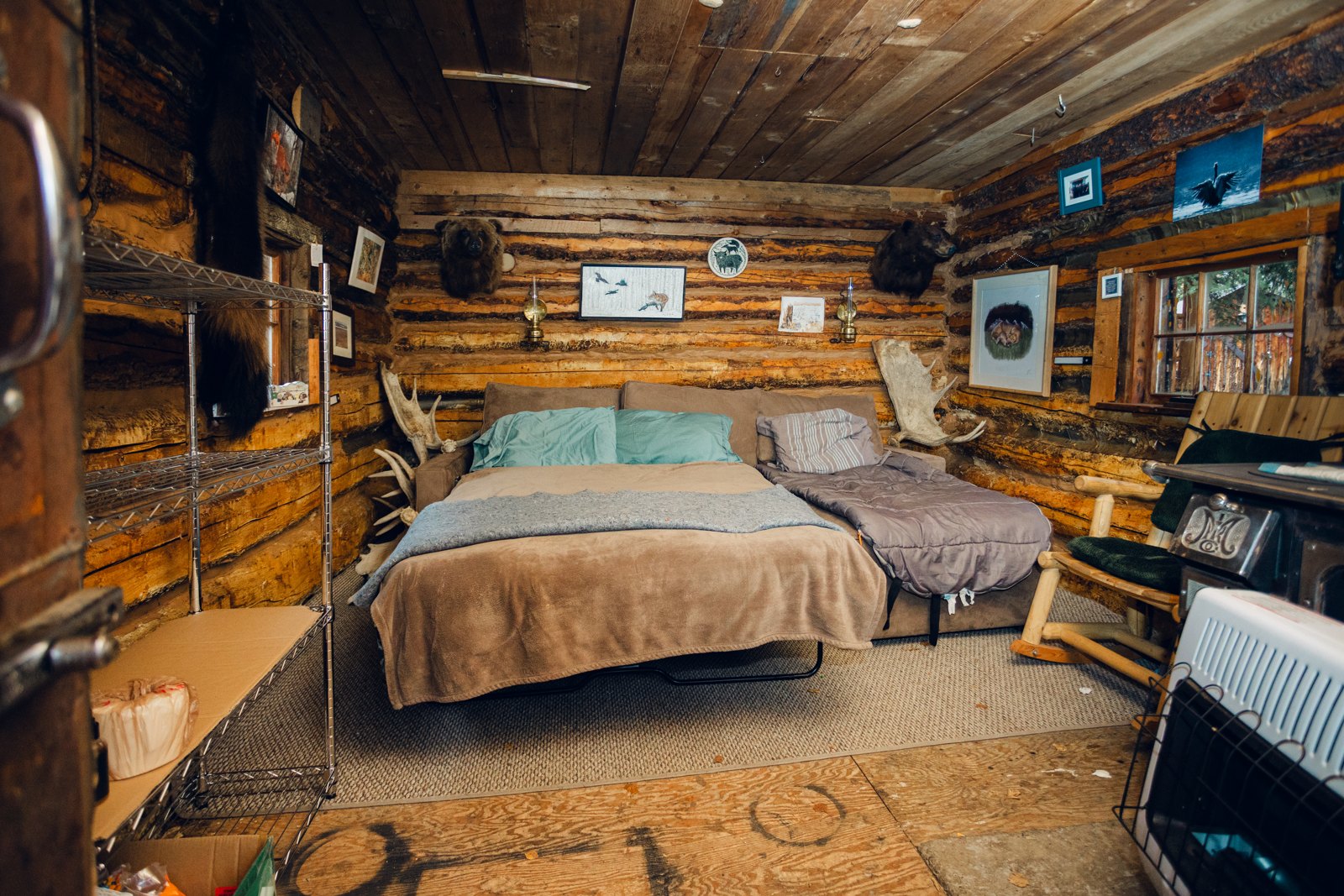
The cabin was also the one Sue stayed in as a girl, the same one she writes about in North of Ordinary. I didn’t understand the significance of sleeping there yet.
At 4:30 the next morning, Alaska time, Knox and I both woke up needing to use the restroom. Badly. Full in the face. I thought, surely we can stand on the porch. So I opened the bank-vault door and pointed an absurdly expensive spotlight into the darkness to make sure nothing was staring back.
I had forgotten there was a screen door. The beam hit it and came directly back into my eyes, and I very nearly created my own river inside Sue’s childhood cabin.
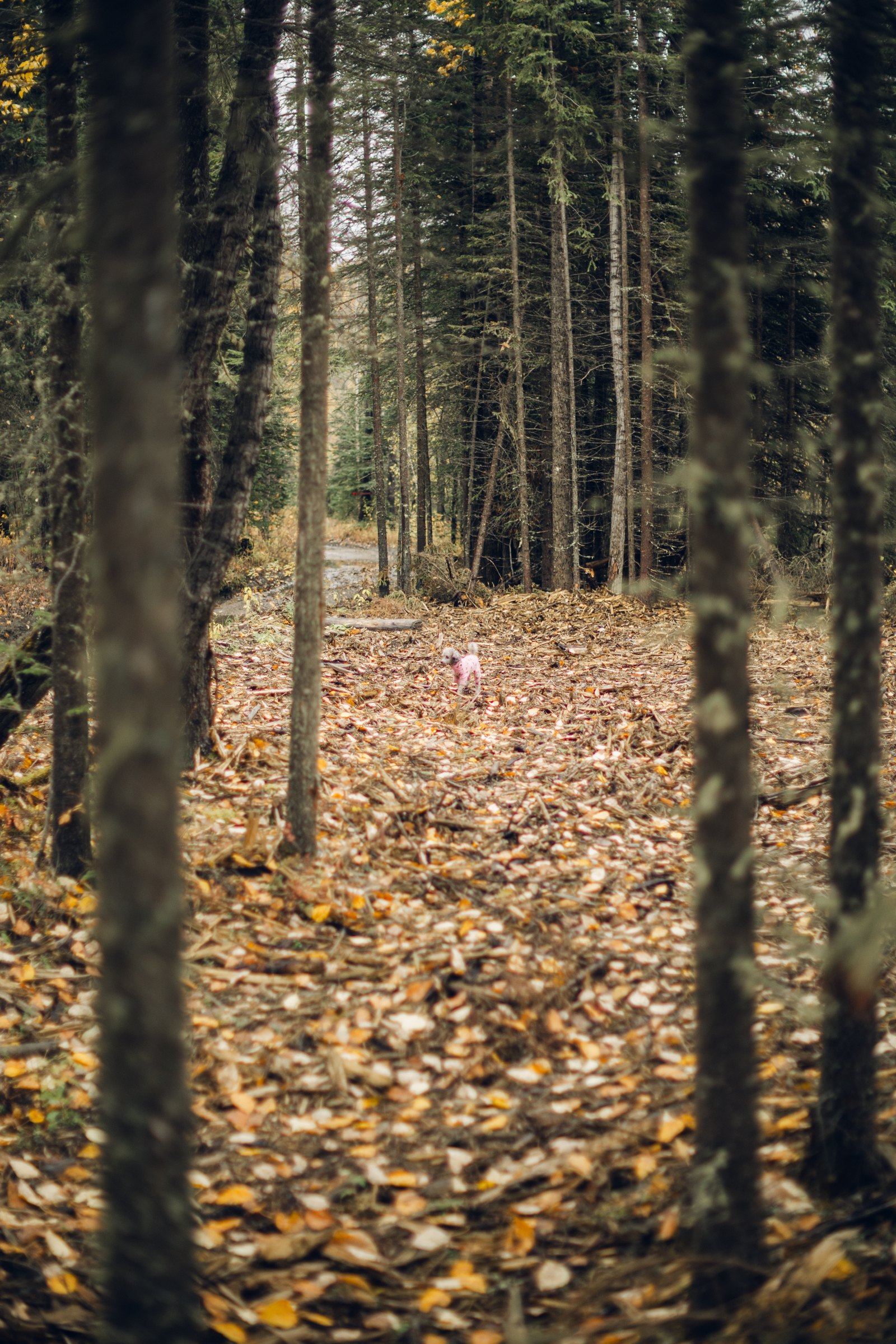
Once I regained my vision, I opened the screen and looked outside, and the honest truth was that I had absolutely no idea what I was looking at. We had arrived in darkness. I’d never seen a map of the property. I didn’t know whether the river was ten feet away or a quarter mile, and I didn’t know what the black wall beyond the porch contained. It was wet, cold, foreign, and for the first time since we started going to Alaska, I had no idea where I was.
What Morning Gave Back
The generator runs roughly from eight in the morning until eight at night. Until it came on, we were tucked inside a cabin solid enough to be nearly soundproof with no electricity, no WiFi and no way to charge a phone, so our only option was to wait for daylight. We talked for a while about how neither of us had ever seen Alaska dark.
“Can you believe we’re in Chena?” Knox asked, and then went back to sleep.
When morning finally came, I opened the door and discovered the river was right there. Close enough that if I’d stepped the wrong direction getting out of the truck the night before, I probably would have met it personally. Then the generator started, which meant Sue was awake, which meant coffee.
Knox had hot chocolate. I had coffee. That became a standing appointment for the rest of the week: slow mornings, coffee, hot chocolate, and stories that started nowhere and wandered wherever they wanted. When I asked Knox later what his favorite part of the entire trip had been, I expected the wolf. Maybe fishing, mushrooms, cutting down the tree.
No. Hot chocolate in the morning. That’s what he picked.
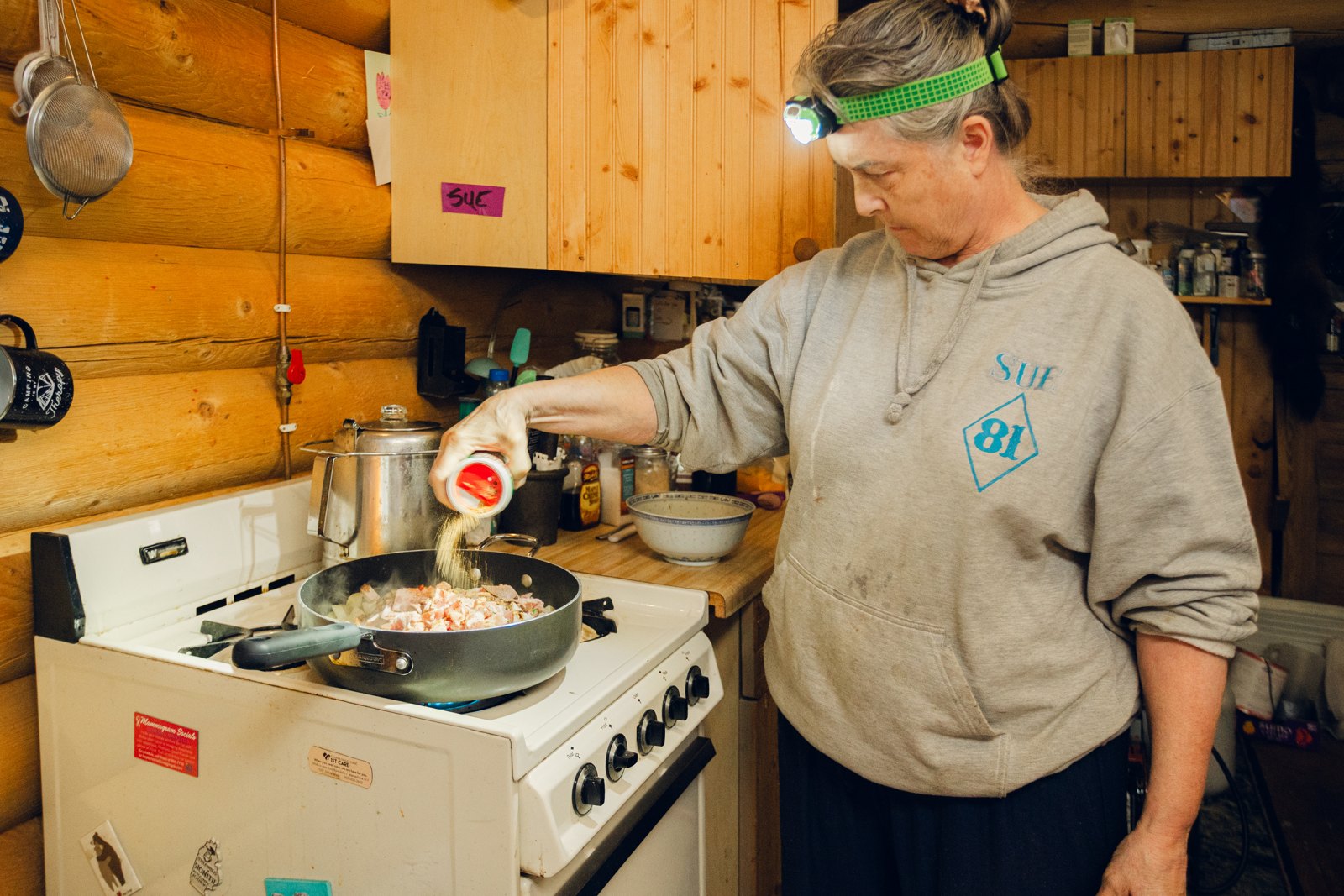
On that first morning, before I understood any of this, I wrote something else down: the birch are yellow, the mountains are hiding in the clouds, and the creek is moving just fast enough to make you stand there longer than you intended. I had gone to Alaska worried the magic belonged to a landscape, and morning one was already trying to tell me otherwise.
Two Small Trees and Then a Skyscraper
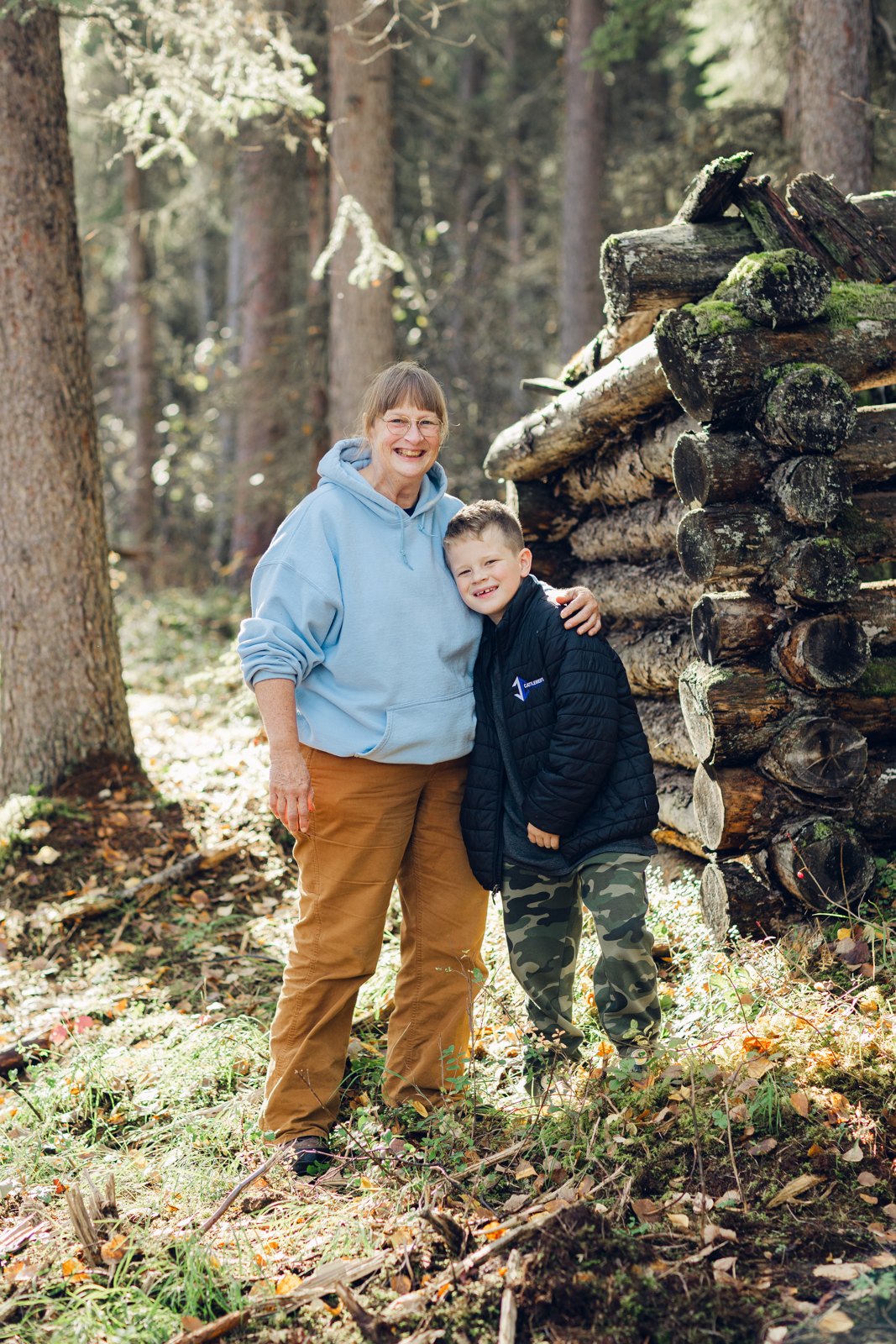
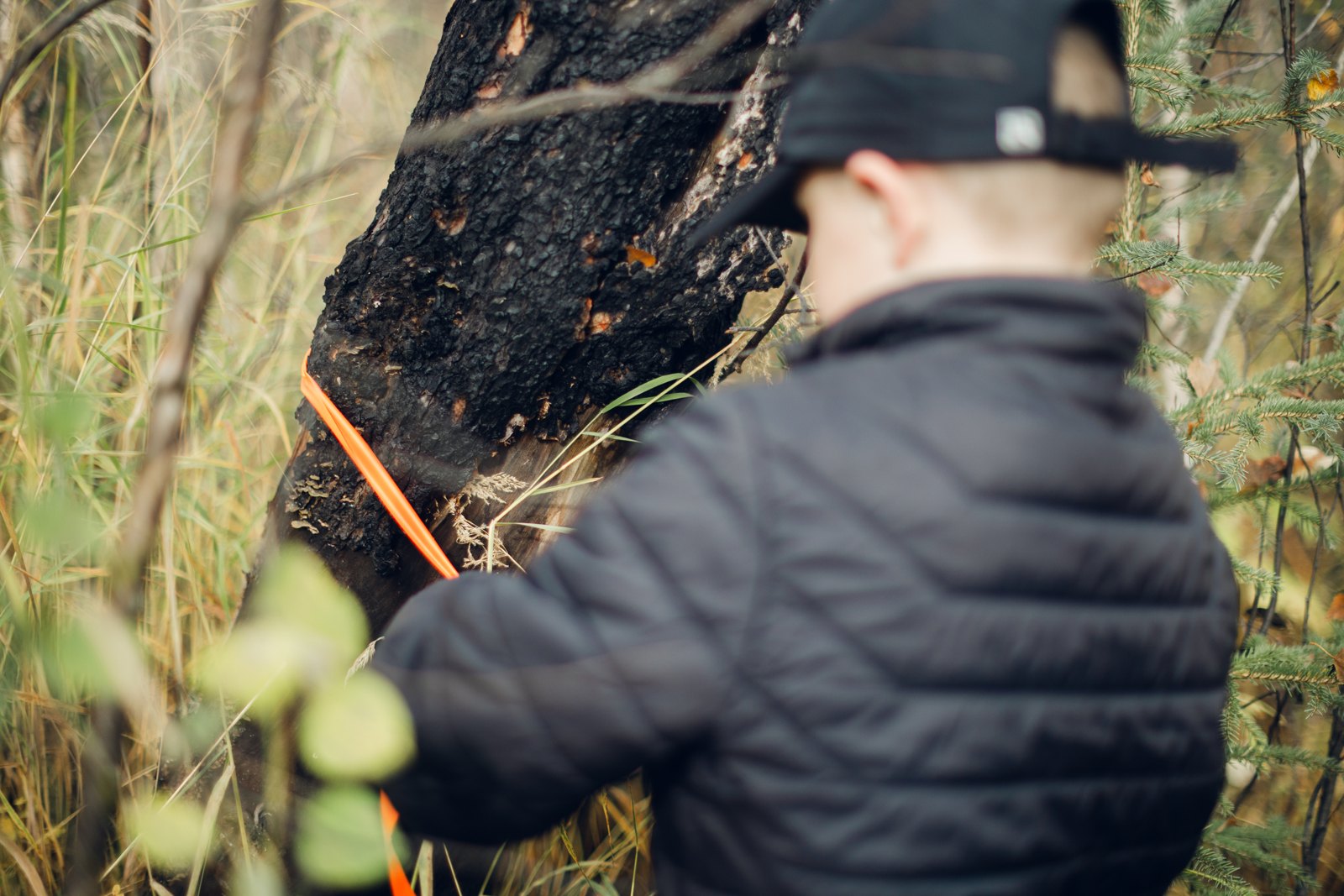
Sue had some dead trees she wanted down and needed, in her words, two able-bodied men. One of the able-bodied men is nine. She gave us axes and sent us around putting flagging tape on the trees she wanted removed, and her friend Irene came over and showed Knox how to notch one side so the tree would fall where he intended, then work from the other side until it started cracking.
He successfully took down two small trees. This was apparently all the credentialing required to enter commercial logging, because his third selection was a skyscraper. You had to lean backward to see the top.
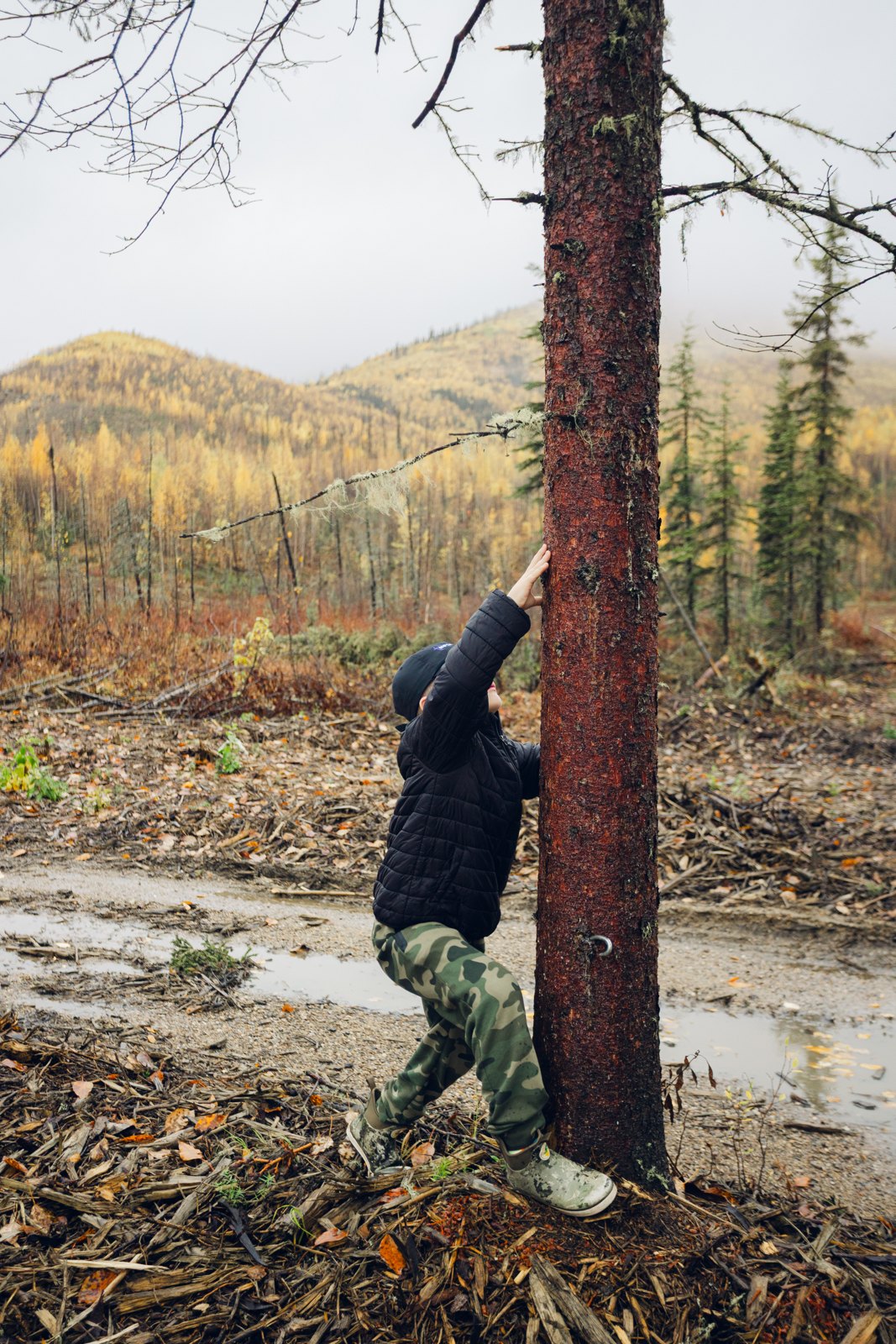
There were mandatory union breaks, running commentary on absolutely everything, unsolicited forestry observations, and repeated assurances that he had the situation under control. But he kept after it, and that’s the part I remember. He didn’t pick something sensible, and he didn’t quit either. Somewhere between wildly overconfident and absolutely committed is where Knox prefers to conduct most of his business.
Eventually the tree cracked and went over. It bounced once, and he grinned like he had personally invented gravity. For the rest of the week the fallen trunk became a balance beam for stick fighting, and he found one piece of wood shaped like a double-headed axe and named the two ends Bruiser and Splinter. I can confirm that Bruiser earned his name. Several of my knuckles were involved.
The Bear That Wasn’t
At Kavik there is a barrel out on the tundra. It sits far enough away that a first-time visitor eventually spots it, raises the binoculars, and announces that there appears to be a bear. It has fooled so many people that it has a name: the Bear Barrel. After three summers I didn’t see a bear anymore. I saw the barrel. That’s what knowing a place does. The false alarms become furniture.
Chena reminded me what the other side feels like.
Knox and I were working outside when I heard something across the river. Branches moving. Something that sounded heavy. Then deep splooshes through the water, and my first thought was that somebody was walking in the river on the other side of the brush. At Kavik you are above the tree line and you can see everything. At Chena the forest keeps secrets.
Knox suggested we head back, and I agreed, partly because the last time we had that particular feeling of not being alone there had been a polar bear involved. We told Sue. Then, because apparently I have not accumulated enough life experience to make better decisions, I went back to investigate while Knox remained on the porch planning my funeral.
The brush moved again. The sound came again. Something large was walking toward me.
Bigfoot, presumably.
Eventually I found the predator. The rain had swollen the river, and water was dropping into a whirlpool behind a rock, sucking down and filling again, and that was the heavy splooshing. The current had also grabbed a tree root, pulling it under and letting it snap back, and that was the moving brush.
My grizzly bear was hydrology.
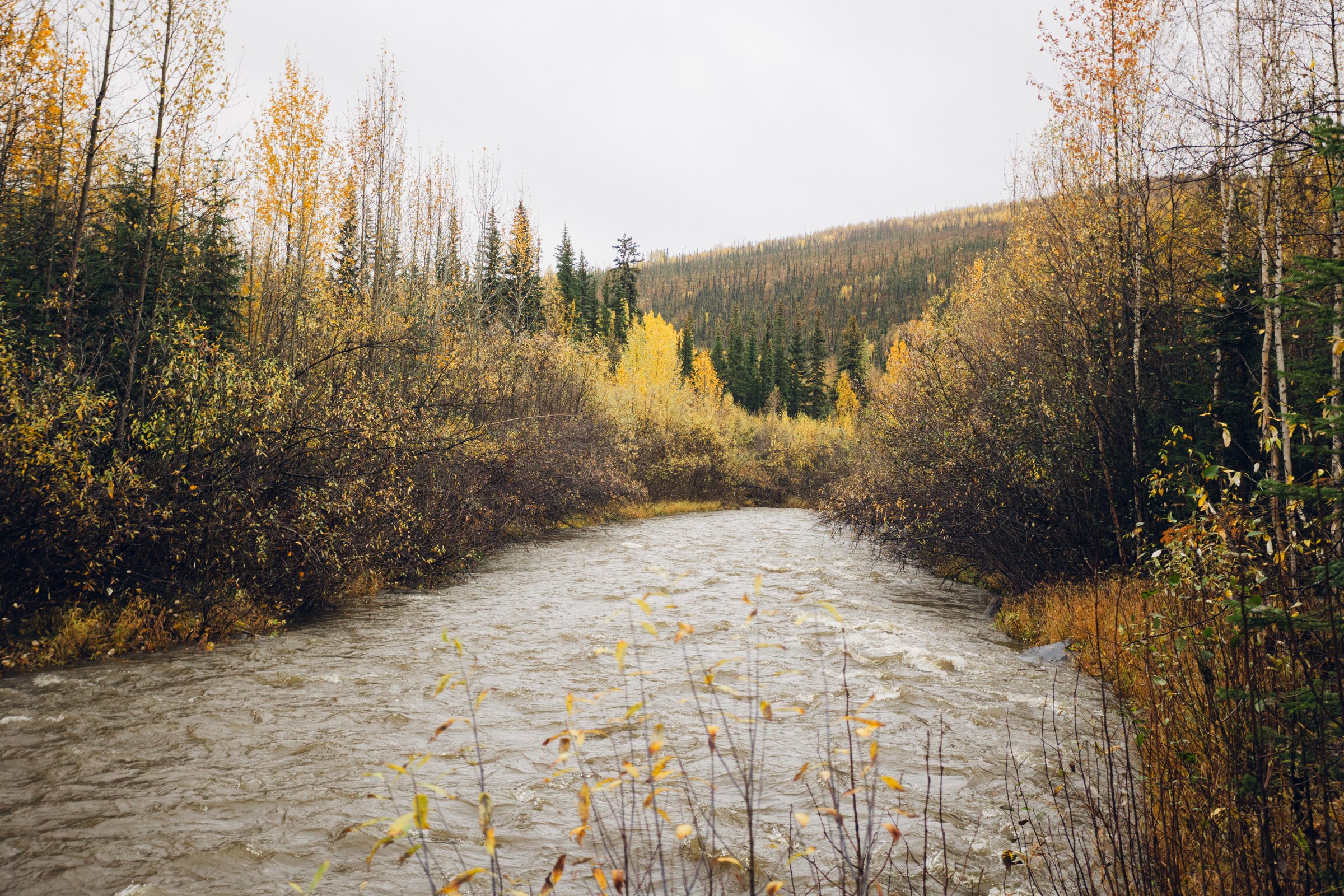
The Bear Barrel was what it felt like to know a place. That river was what it felt like not to. I had developed tundra instincts, and they were useless in trees. Maybe that was why Chena didn’t make me less present than Kavik. It made me less competent, which, as it turns out, demands even more attention.
It made me less competent, which, as it turns out, demands even more attention.
Sue Has a Friend
At Kavik nobody casually comes over. There are no roads and no neighbors dropping by, and if someone arrives you generally hear the airplane before you see them. Chena is different. Somebody is always turning up.
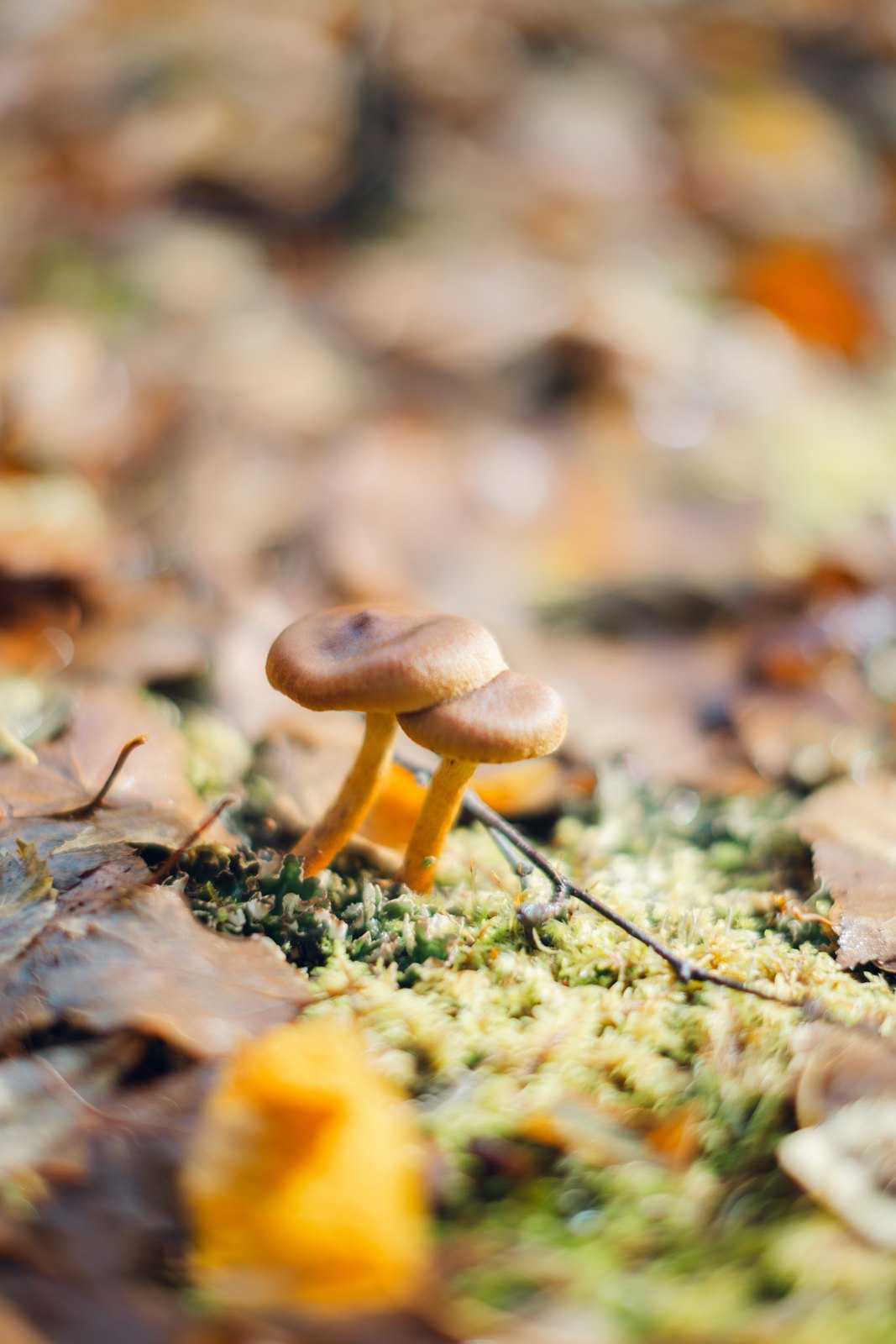
Sue said her friend Irene was coming, and Irene turned out to be the mushroom department. She took Knox into the woods and taught him how to forage, how to make a spore print, what you can eat, which mushrooms work as kindling, and which ones may apparently result in you tasting colors and hearing the northern lights. He brought home a polypore bear bread and a horse hoof mushroom, and he also learned that shelf mushrooms make excellent drums if approached with sufficient Ace Ventura energy.
Most kids get a nature walk. Knox got a private consultation with Alaska’s mushroom division. At some point I stopped asking questions about Sue’s network of people. She has a person for everything.
Then neighbors came over from across the river. We introduced ourselves and they said, “Oh, we’ve heard a lot about you.” Nice. Also slightly alarming. Apparently Sue talks about us roughly as much as we talk about her.
They brought grouse, a jar of moose meat, and hot chocolate refills. That one got me. They had never met Knox, but they already knew the nine-year-old from Texas drinks hot chocolate.
They also told us we were welcome to use their trails. Then, almost as an afterthought, they mentioned that a grizzly had killed a moose about twenty yards off one of them the year before, buried it, and would have converted anyone who accidentally approached into part of the local ecosystem. We did not hike that trail. I am not yet the bear-country expert I aspire to be, and I would have been comfortable carrying a bazooka and still decided it wasn’t worth it.
Neighborly to the max, though.
Let’s Shoot It
One morning I went out early with my camera, and on the way back I saw what I can only describe as a basketball-sized ball of feathers standing in the yard. I photographed it and went inside to show Sue. She looked at the picture.
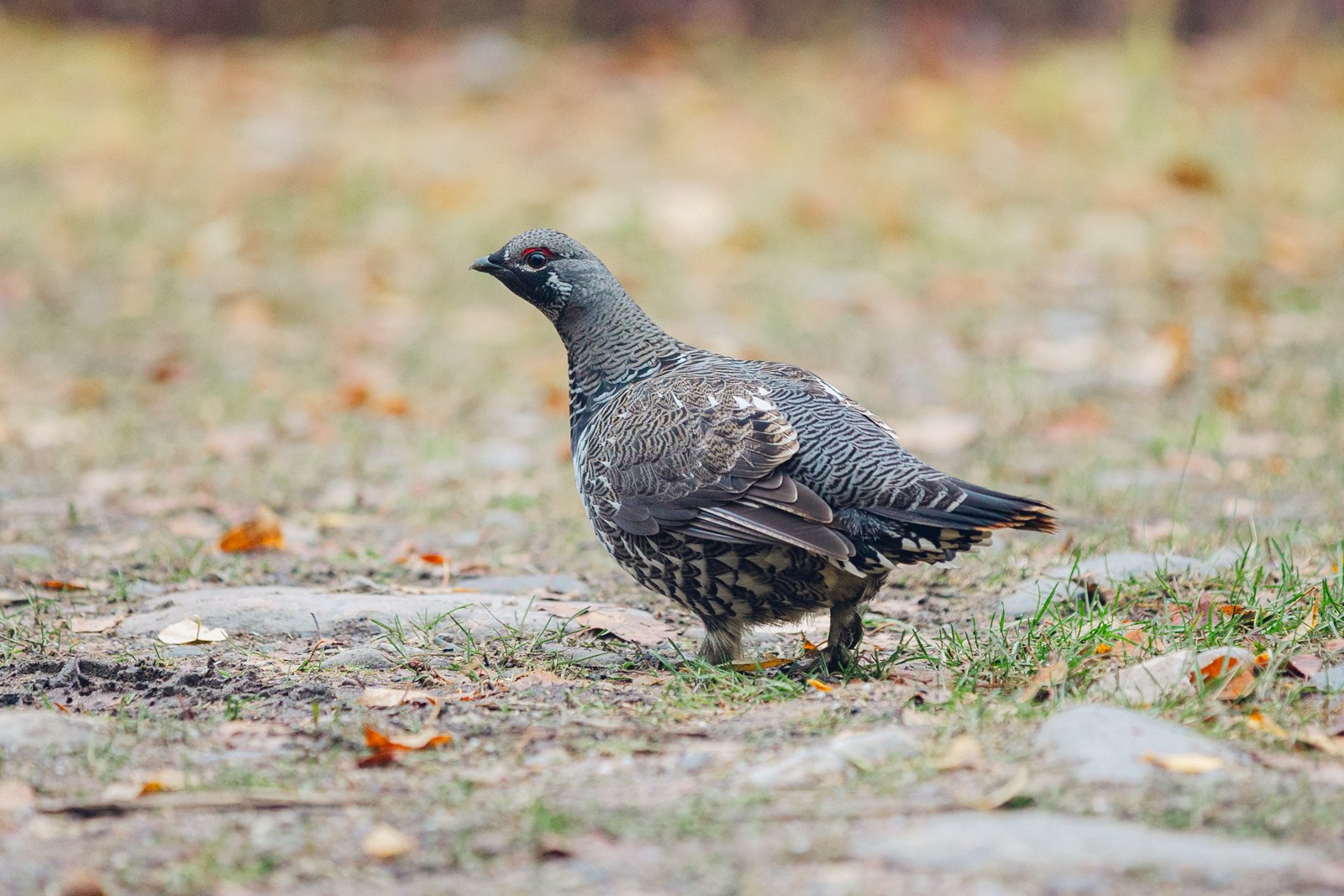
“Let’s shoot it.”
One shot. Bird on the ground maybe two feet from the cabin we’d been sleeping in. Spruce grouse are essentially Texas dove with the volume turned up. A dove breast is about the size of your thumb. These are closer to your palm.
The next morning another grouse was walking around the exact same spot, completely unconcerned by recent history. Knox named him Pork. I didn’t want to bang on Sue’s door over a bird, so I filmed him for a minute, went back to our cabin and lay down. Thirty seconds later a shotgun went off beside my head.
Sue was awake.
Pork flew before he dropped, so we started tracking, and I need you to understand that these birds possess camouflage technology that would embarrass the military. Eventually I heard feathers above me and found him perched in possibly the branchiest tree in interior Alaska. Even if she hit him, I couldn’t see any path that ended with the bird actually reaching the ground.
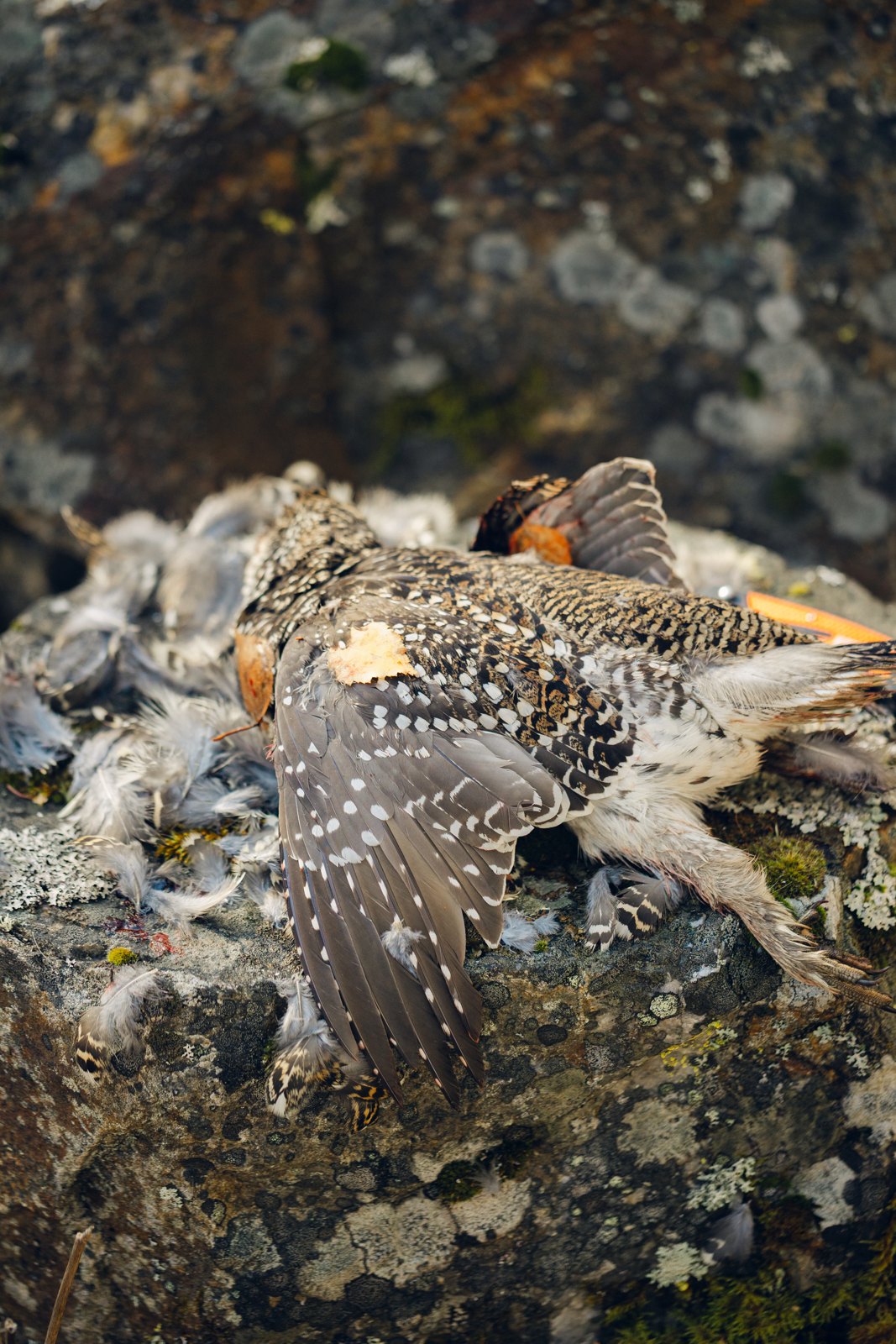
She fired. Spruce grouse Plinko commenced. Branch. Branch. Branch. Ground.
Sue picked him up. “Let’s go get coffee.”
Solid plan, friend.
The week, at a glance
The Kind of Listening Nobody Does Anymore
One afternoon Sue wanted to walk around and see what was ready. Not far from where we’d found the grouse, we hit a stand of highbush cranberries. “Be right back,” she said, and disappeared to the cabin and returned with containers. We filled a mason jar, a thermos and a plastic sack, and it took hours.
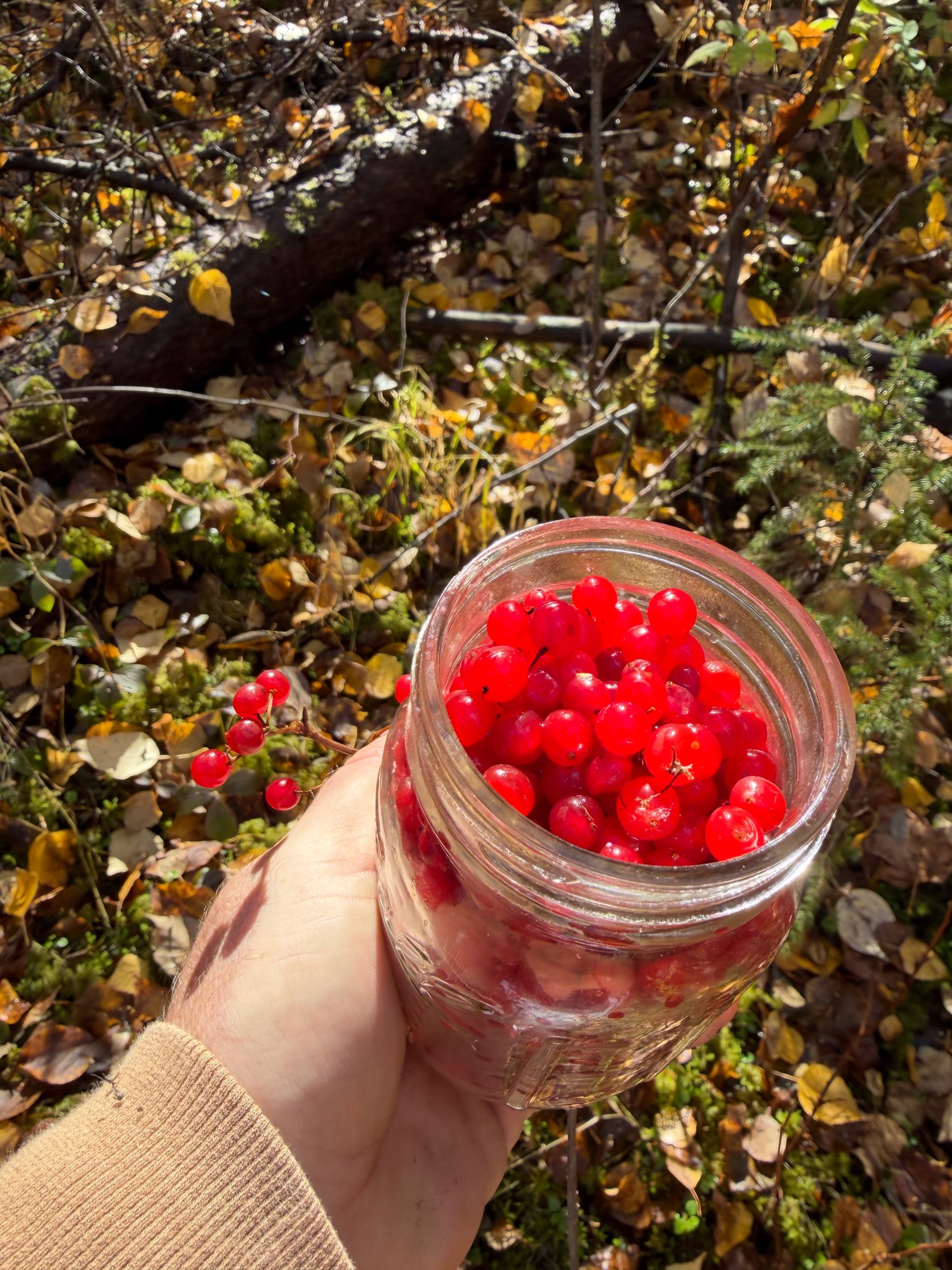
Those gathering trips are where the good conversations happen. Nothing formal. Nobody says let’s sit down and discuss our feelings. You talk while your hands are busy, the conversation wanders, and something meaningful slips out when nobody is watching for it. Knox spent much of the expedition battling what he called stickleberries, his personal name for the wild rose bushes that kept attacking him, so Sue and I picked cranberries while Knox went hand-to-hand with vegetation.
Somewhere in there I mentioned, mostly to myself, that Knox had consumed almost nothing except Sunny D since we arrived and should probably drink actual water. Sue didn’t respond. No lecture, no “you’re right,” nothing. She just filed it.
When we got back, I was on the phone with Catherine. Sue came out holding a glass of something red and steaming.
“Try this.”
Historically, when Sue says try this, saying yes has worked out, so I did. Then I tried it again. She had boiled the berries we’d just picked, strained the juice, added honey and a whisper of cinnamon. Forest Kool-Aid. Then she explained, casually, “I heard you tell Knox he hasn’t drunk anything but Sunny D since he got here, so I made him something else.” Berries that had been on a bush an hour earlier, and no artificial anything.
And there it was. One of the small things I didn’t understand yet was the entire story. She heard him. The neighbors heard about him. Irene taught him. Everybody seemed to be quietly collecting information about this kid and figuring out what they could give him.
Everybody seemed to be quietly collecting information about this kid and figuring out what they could give him.
Fishing With People Who Actually Know What They’re Doing
Sue said she had a friend named Melissa who could take us fishing.
Again: Sue has a friend. I should have known by now. Melissa was not a casual fishing friend. She is a serious angler who has traveled specifically to fish and has fished with local people using methods involving a lasso that I still do not entirely understand.
Knox and I arrived with an Avengers rod and a Toy Story rod. Authority established.
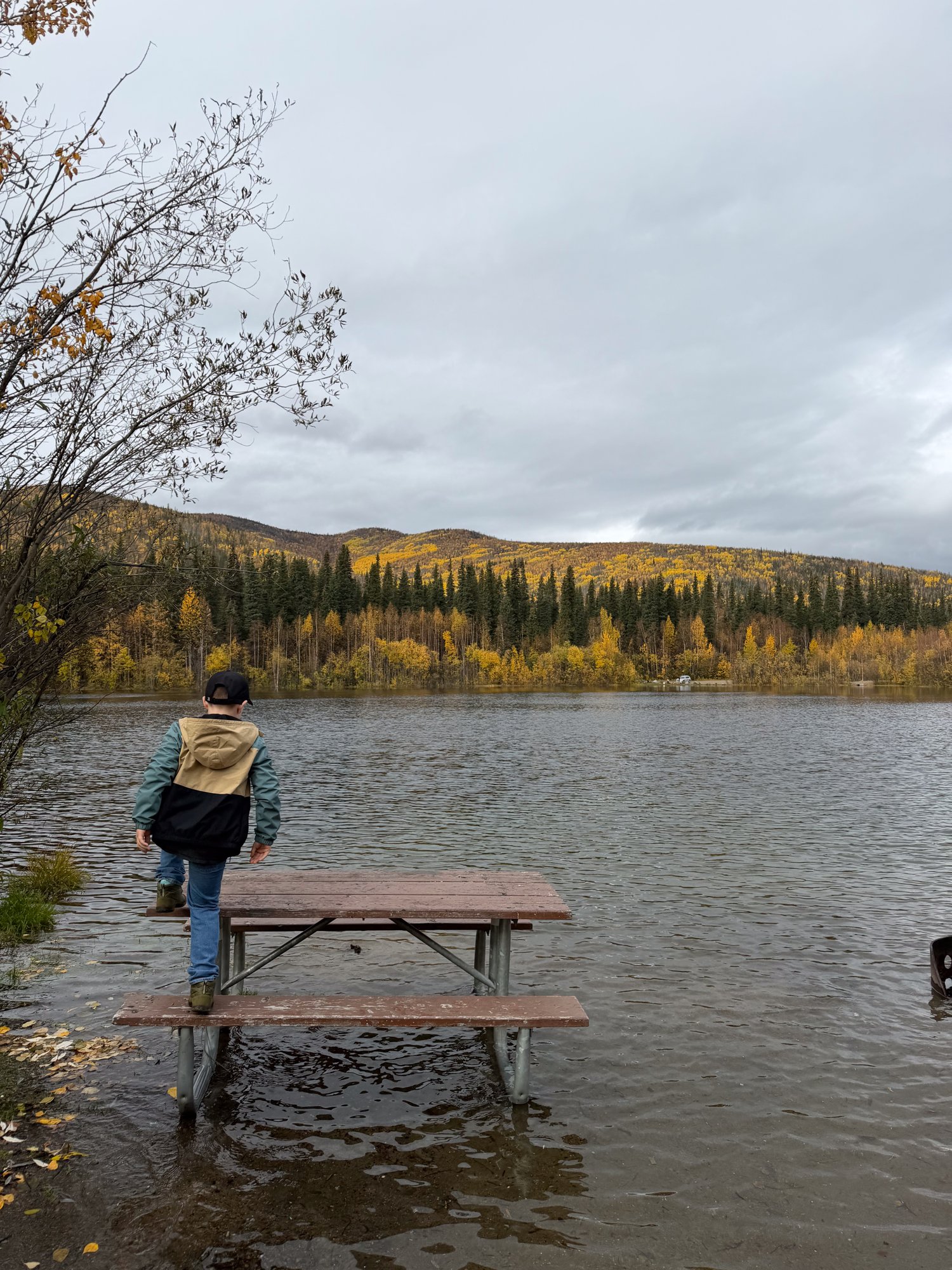
Heavy rain had flooded the park, and picnic tables sat in the lake. Minor infrastructure issue. Fishing remained open in my professional opinion.
We spent the first part of the afternoon attempting to look like men who knew how to cast. We did not. A bald eagle started working the edge of the lake, so I pulled out my phone to film it, and in the middle of the video my son’s voice rings out:
I’M IN A TREE.
He was not in a tree. His lure was.
By the end of the afternoon he could actually cast. Shortly afterward I put my own lure in a tree, which officially made this a family program instead of a Knox issue. Sue decided to retrieve it, and because the park was flooded this required wading into knee-deep water and leaning onto a sapling with approximately the structural integrity of a drinking straw. For a four-dollar lure. I stood safely on land counting the seconds until she went face-first into the lake. Would I have laughed? One hundred percent. Would I have helped her? Ninety-seven percent, with a delay while I regained composure.
Naturally, she got the lure.
Later, with the clock running because Knox had Bible study at three and was not missing it, I told him five more casts. Five became six. Six became seven. Seven became the unwavering conviction that the next cast was definitely the one.
Then: fish on.
I backed up the bank dragging the thing with me until a rainbow trout landed on the asphalt. I body-slammed it, got both hands around it, and finally hollered, “I GOT ONE.” I carried it proudly over to Melissa and Knox and announced that it appeared I was the best fisherman here today. Melissa smiled. My son did not stop casting.
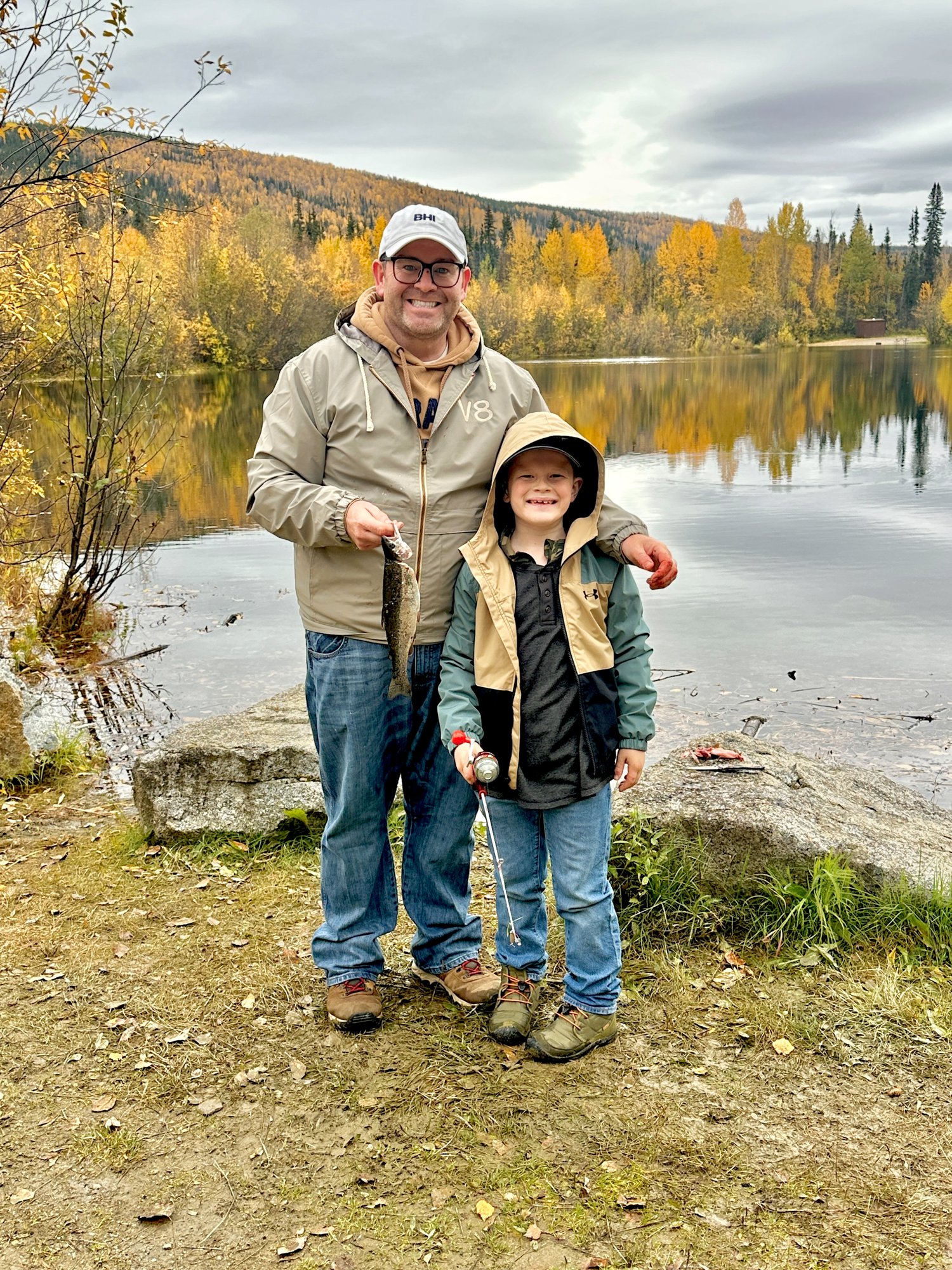
Melissa asked whether I wanted help cleaning it. “I bet you know more than me about butchering a fish,” I said, which is one of the great understatements of my life. One cut. Another under the chin. Everything out together. Thumb down the spine to remove the bloodline. Two seconds, trout to skillet.
I had accidentally asked a surgeon whether she knew how to use scissors.
We returned to the cabin with trout and grouse, and dinner was solved. Sue would fricassee them and we were going to eat like kings. Then Sue suggested we give the trout and grouse to Melissa as a thank you. Thoughtful. Gracious. Correct. We hated it.
Melissa went home with our dinner.
Lesson: if Sue says I have a friend, prepare to meet someone wildly overqualified for whatever you are about to attempt.
The Part She Wouldn’t Let Me Help With
There was another difference this trip. Sue was recovering from lower spinal surgery, something she has discussed publicly. She is still Sue. Still capable, still stubborn, still fully able to make you feel ridiculous for suggesting she can’t do something. But I watched her move differently, and more than that, I watched what accepting help costs her.
This is a woman who will do almost anything for another person. Our friendship exists because years ago two strangers asked her for a signed poster and somehow she ended up flying us into Kavik for three summers. She gives easily. Receiving is different.
I lost count of how often I said, “Let me get that,” or “Can I carry that?” or “Need help?” The answer was always the same.
“I know how to ask for help if I need it.”
Always pleasant. Always final. And somewhere underneath it was something I understood: thank you, but in a few days you’ll leave, and I’ll still need to know how to do this.
There’s a point in friendship when the person who has always taken care of you becomes someone you want to take care of too. It isn’t pity and it isn’t weakness. It’s almost the opposite. You finally love somebody enough that standing there while they struggle feels worse than doing the hard thing yourself.
Sue spent our first three summers teaching Knox and me how to exist in her world. Where to walk. What to notice. When to carry a gun. Which berries to pick. What the birds were telling you. What that track meant. Now I was standing in her kitchen asking whether I could lift the water.
She didn’t need saving. She just had people now who wanted to carry something back.
She didn’t need saving. She just had people now who wanted to carry something back.
The Banana Bread Incident
To understand what happened next, you need background. Sue can cook. Really cook. Caribou tacos on fresh flour tortillas, which Knox reviewed as putting the opposite of boo in caribou. Moose-and-potato breakfast hash. Apple cinnamon muffins. Lemon lavender cookies, which were one of the first things she ever fed me at Kavik and ended whatever relationship I previously had with sensible eating. Pan-fried grouse with hibiscus sauce and basil cream, made on a four-burner camp stove in a kitchen the size of a shoebox.
You’d expect ramen and Oreos to qualify as fine dining that far north. Instead Sue makes her own seasoning blends, turns flowers from a tea bag into syrup and somehow finds five courses inside one piece of meat and a potato.
At some point I told her, sincerely, that she is a great savory cook but maybe an even better baker. What I meant was: you are brilliant at all of it and somehow the desserts are even better. What Sue heard was: you can bake but you cannot cook.
She bristled in exactly the way a close friend bristles when you have unknowingly handed them ammunition. I attempted to clarify. Every clarification made it worse. “Sure.” “Uh huh.” “Keep diggin’.”
For the rest of the week I asked whether she ever missed. Surely, at some point, she had produced absolute bollocks. She declined to dignify the question.
Then, two days later, Knox and I were outside on wolf watch when the screen door opened.
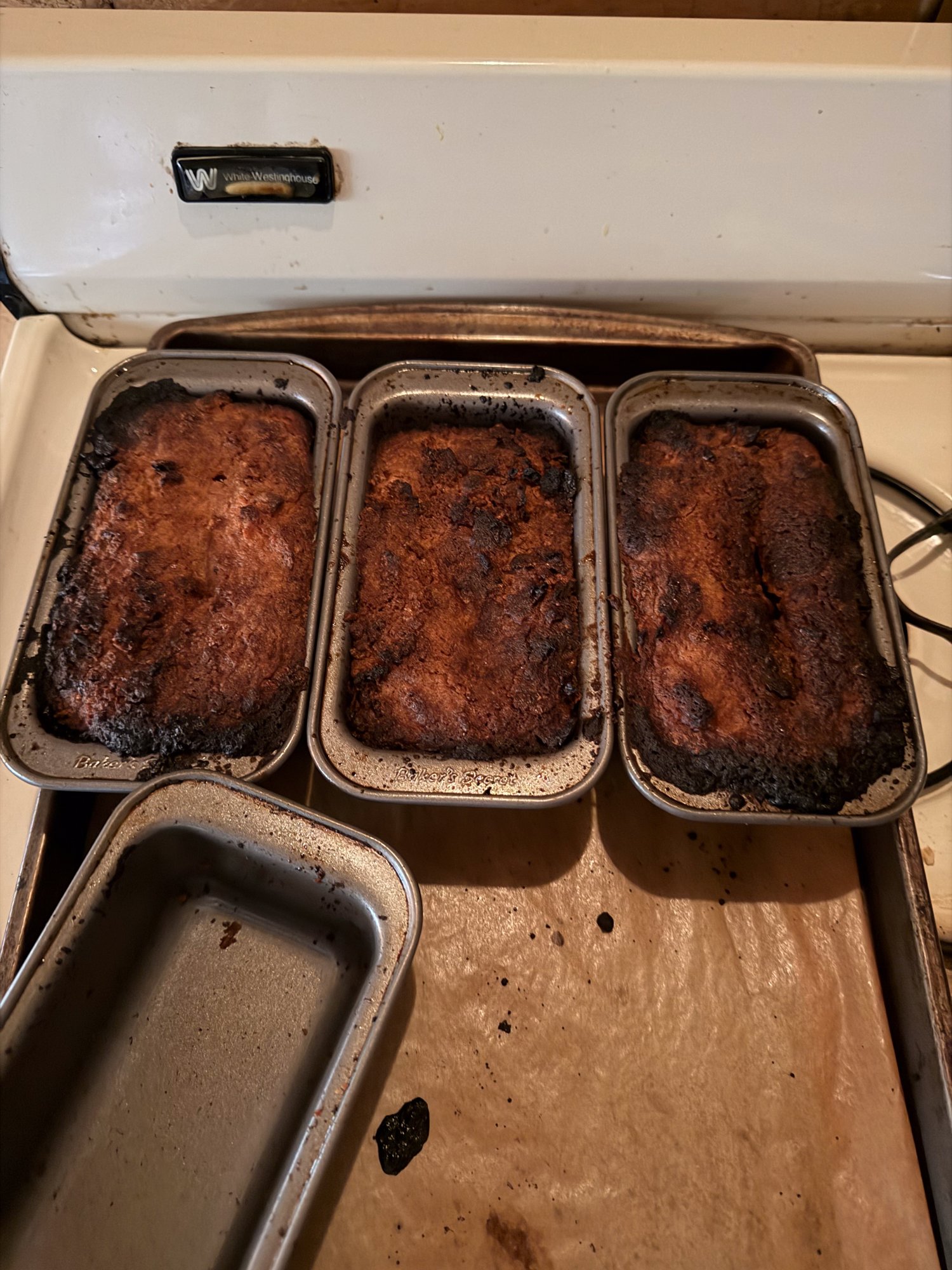
“Well, I burnt the banana bread.”
She didn’t burn it. She BURRRRNNNEDDDDD it. The beautiful streusel topping was gravel, the raspberry ribbon was roofing tar, and the bananas, I will concede, were technically baked. This is a woman who has waded into a flooded lake for a four-dollar lure, tracked a boar hog through thick South Texas brush and built a life in places most people wouldn’t survive a long weekend. And she absolutely annihilated a loaf of banana bread. It was like poking a dragon, and I enjoyed every second.
That evening she made cheeseburgers. I finished a double and she looked over. “I didn’t burn that too much for you, did I?”
There are very few luxuries greater than reaching the stage of a friendship where the person you once watched on television can talk smack to you over a cheeseburger.
The Gift
Late in the week, Sue told Knox she had something for him. “Close your eyes. Hold out your hands.” She put a stack wrapped in a pillowcase into them.
Plates. Not new plates. The plates from Kavik.
The same ones he’d eaten from during three summers at camp. Blueberry pancakes made with berries we’d picked. Hash browns with an amount of Tony’s seasoning I would describe as structurally unsound. Meals after long walks across the tundra. Breakfasts where nobody had anywhere else to be.
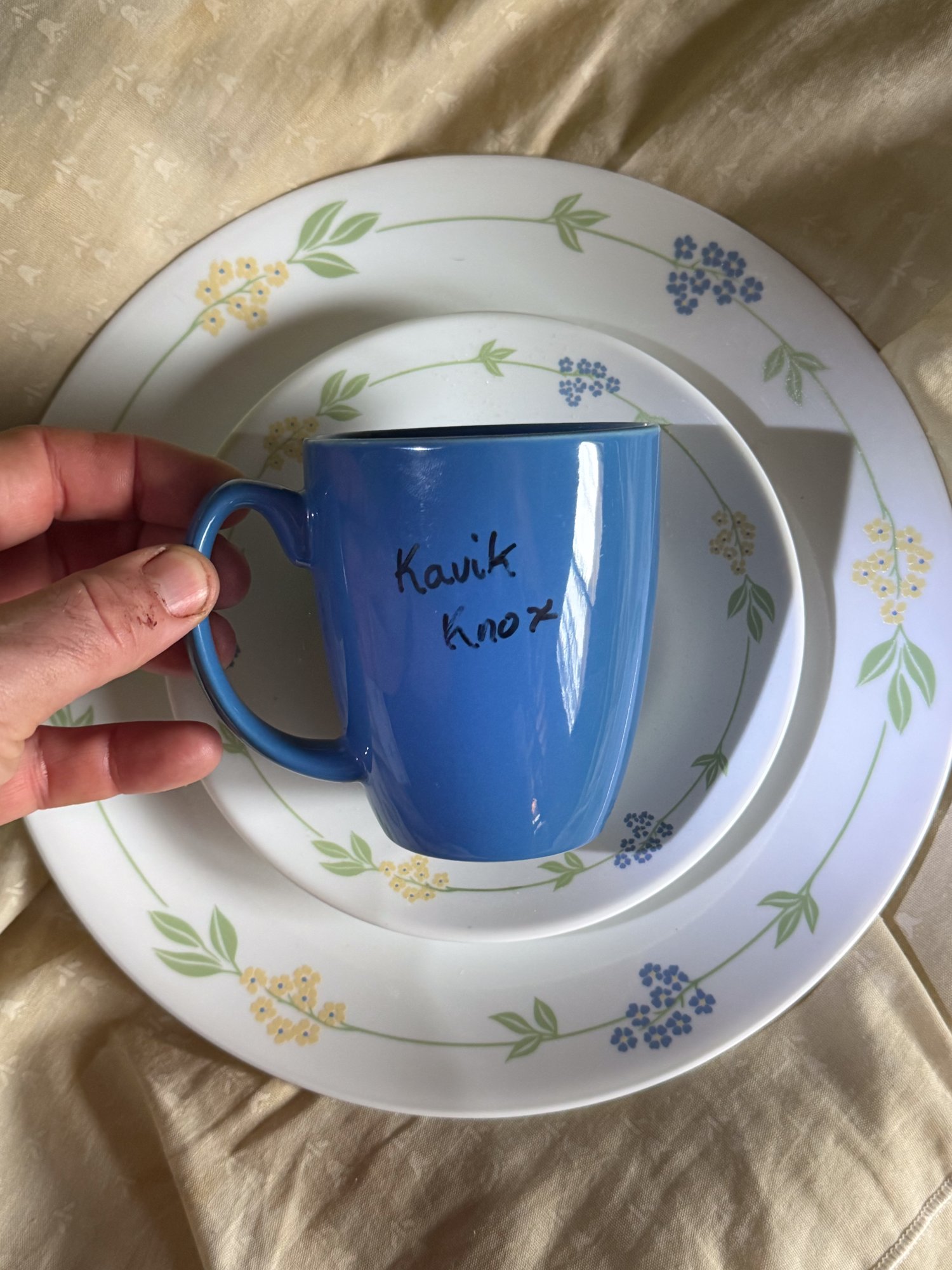
And a mug. His mug. The one he drank hot chocolate from at Kavik. On the side, in Sue’s handwriting:
Kavik Knox.
I didn’t understand how much those two words would hurt until later. Because she had named him. Not just Knox. Kavik Knox. A specific version.
Six-year-old Kavik Knox.
Seven-year-old Kavik Knox.
Eight-year-old Kavik Knox.
The little boy whose feet I still hear running over gravel. The boy Sue watched grow one summer at a time. The boy who thought a bowl of blueberries was treasure and could spend an afternoon moving rocks around a river for reasons understood only by civil engineers and small children.
The mug came out of Kavik with her. The writing didn’t. Sometime before she wrapped that stack in a pillowcase, she sat down and put two words on the side of a cup that had been in her camp for years without needing a name. Not back when it was just the one the kid always grabbed. She wrote it in a cabin outside Fairbanks, knowing there was not going to be another summer, knowing exactly what she was handing him.
She wrote Kavik on it after Kavik was gone.
That is what you do with a name when you are afraid it will stop getting said out loud. I spent a week in her woods working out that I had been grieving a version of my son and calling it a place. Sue had that figured out before she picked up the marker.
I asked Knox later what he thought when she gave him the dishes.
Sue had that figured out before she picked up the marker.
“I already knew that Sue was a nice person. And I thought that she really cared about me, and that she was giving some dishes that she will need in the winter, to me, where we don’t really have a winter in Texas.”
That was his concern. Not look what I got. What if she needs these. Nine-year-old logic. Nine-year-old love.
Irene gave him a Camp Caribou shirt. The neighbors gave us moose meat, and they gave Knox hot chocolate before they’d ever even met him. Melissa gave us an afternoon of fishing and knowledge we had no business receiving for free.
We brought Sue something too. Knox’s Shorthorn heifer CF Mona Lisa 547 is called Bill Jr., named after Sue’s dog, never mind that Bill Jr. is female. The naming department had already left the station when anybody noticed. Bill Jr. went on to become the American Shorthorn Heifer Show Female of the Year after a season that included Pennsylvania, National and Junior National championships. Sue followed it all, and at some point she mentioned she’d like a buckle. So we made one. World Champion Friend. Family by Choice. A Brahman bull on one side, a bull caribou on the other, her initials and ours together in the middle.
Our friendship began because we asked Sue for something: a signed poster. Years later, we were standing in the woods giving something back.
Everybody in this story gave somebody something, and the things that mattered most weren’t really the objects. They were pieces of themselves.
Audio will remain hidden until Luke supplies the clip and transcript.
The Wolf
Our final full morning, we were at Sue’s with coffee. At some point during the week she had quietly noticed my routine and started having a cup ready when I came through the door. Hot chocolate for Knox, coffee for me, no discussion. She just knew.
We sat watching out the window to see what was moving. For three summers at Kavik, I had told Knox to stay alert. Sue had repeatedly told us to carry a gun, and not in the tone of someone floating an optional lifestyle suggestion. Knox filed most of this under Dad Being Paranoid.
Then a white wolf walked out of the woods.
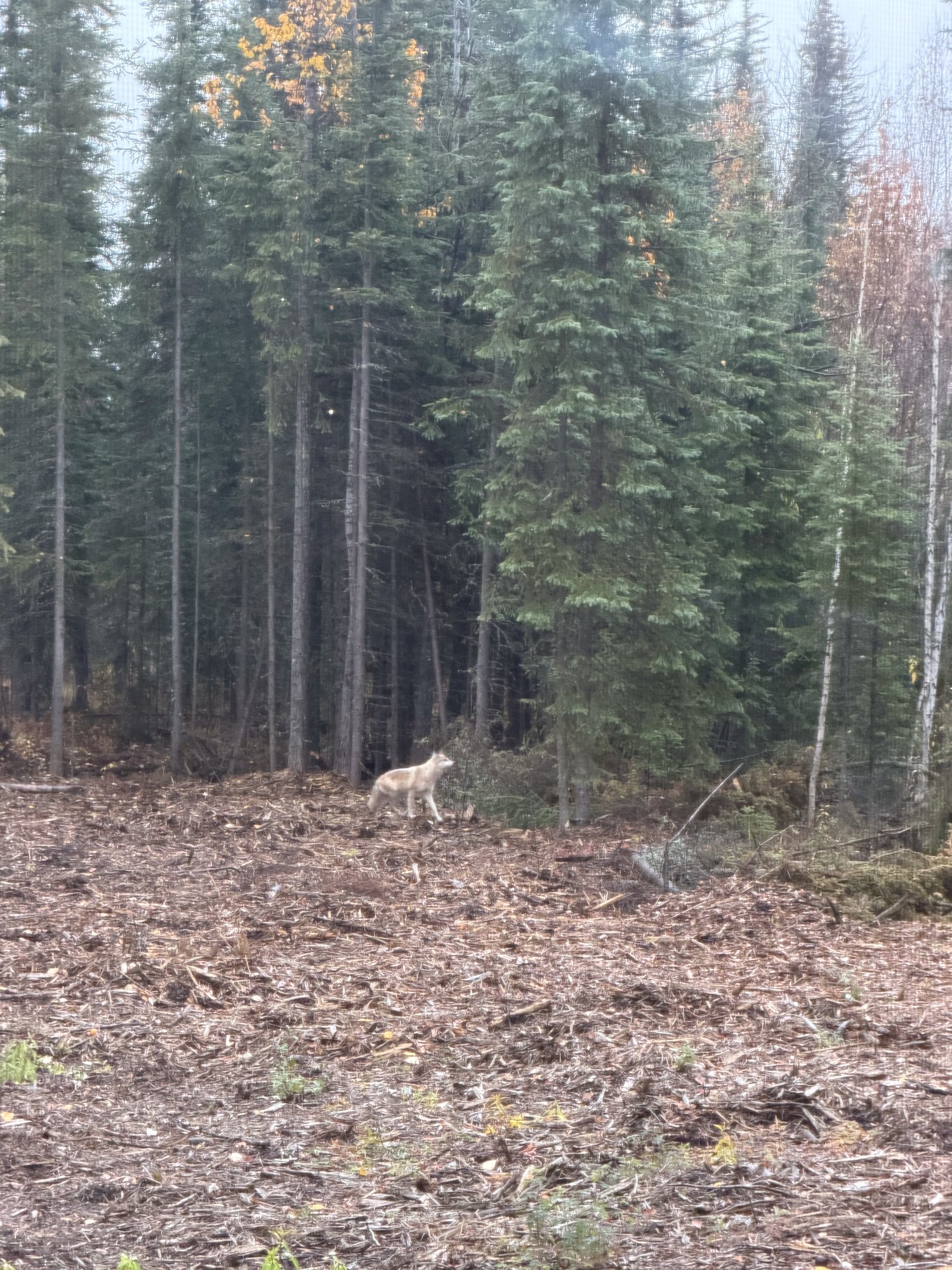
It came through the place where we’d felled the big tree, past the trunk where we’d spent the week stick fighting, and across the ground where we had stood looking toward the foothills. In forty seconds, it retraced our entire week.
We pressed our faces to the glass, and it occurred to me that the arrangement had reversed. We were the exhibit. Human zoo. The wolf had come by to look.
Knox’s fight-or-flight response selected flight. Immediately. Texas was available and he was prepared to return.
A few days earlier we had all been sitting in the living room when Sue suddenly said, “I hear something.” The generator was running and I heard absolutely nothing, but Sue’s hearing has apparently evolved beyond standard human equipment. She went outside. Knox began drafting her obituary. When she came back, we asked what she’d found.
“Yes, but I don’t know what it was.”
Not the sentence you want from a woman whose entire life has involved identifying things in the woods. Something dark, moving fast. Could have been a dog. Could have been a wolf. Not enough information. Knox, committed cryptid enthusiast, offered another possibility: “Could’ve been Bigfoot.” We let it go.
Then the white wolf crossed the yard, and something assembled in Sue’s head. The earlier shape had likely been another wolf, and they appeared to be using a cave behind the cabin where a bear had previously denned before fallen trees changed the situation. Useful information. Would have enjoyed having it slightly earlier.
I asked Sue whether wolves weren’t normally in a pack. “It’s not the one you see you have to worry about.” Comforting.
Later I asked Knox whether maybe, possibly, perhaps his father had not been entirely insane during the previous three summers.
“I thought you were paranoid. And I still kind of think you are. But now I don’t think you’re overreacting as much.”
I’ll take it.
The Plates Came Home Because the Place Couldn’t
There are objects parents understand differently than children. The hospital bracelet. The first tiny boots. A drawing that looks like nothing to anyone else. A stuffed animal missing half its fur. To the child, they’re things. To the parent, they’re coordinates. Proof that somebody existed exactly that way at one point in time.
Those Kavik plates are coordinates. Three summers of childhood stacked one on top of another. The plates came home because the place couldn’t, and maybe, in some impossible way, because Kavik Knox couldn’t either. Not the six-year-old one. Not exactly.

To the child, they’re things. To the parent, they’re coordinates.
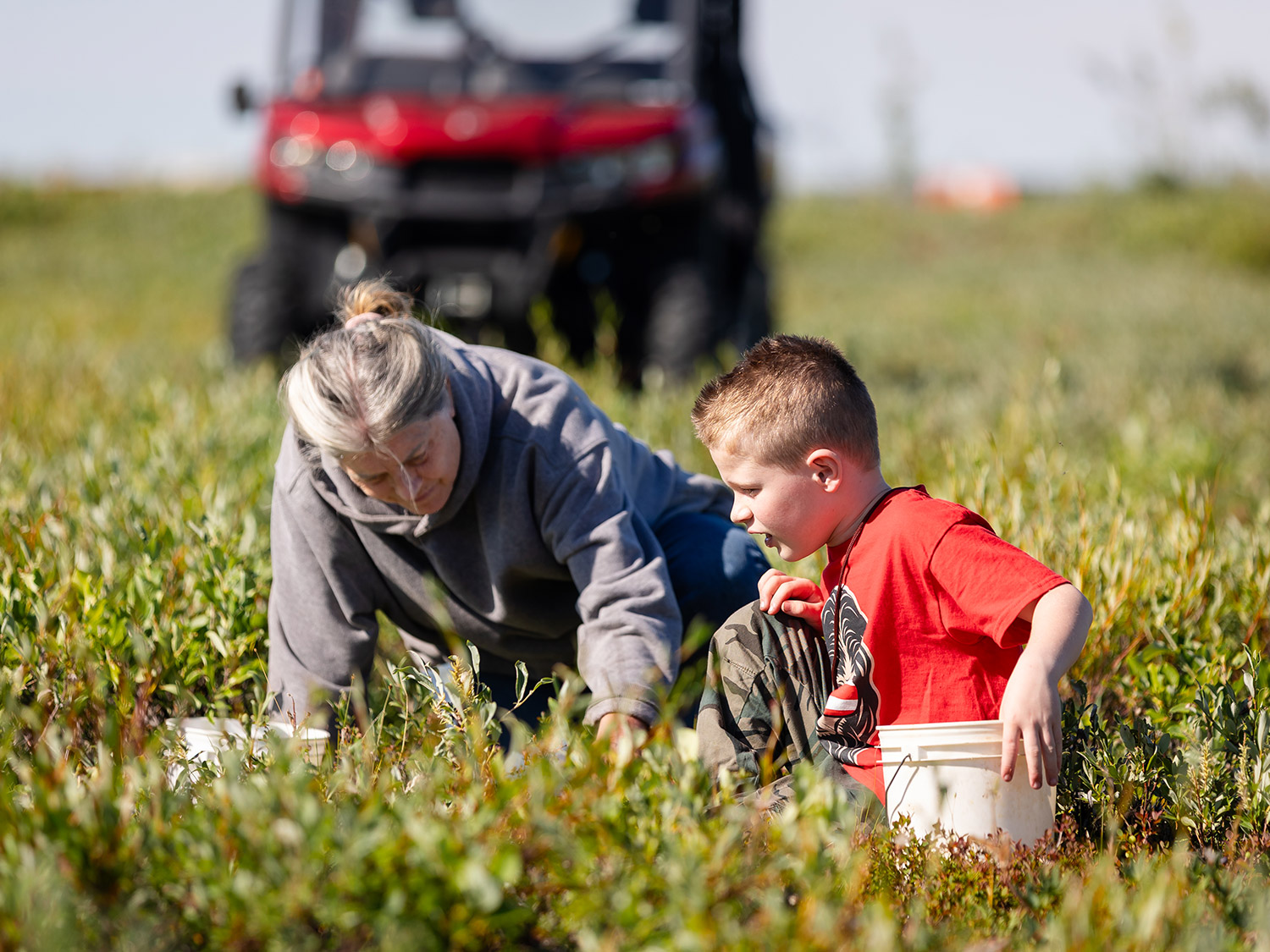
He’s nine now. Longer legs, bigger words, more confidence. He can cut down trees and tell me I’m paranoid while simultaneously requesting immediate medical evacuation because he saw a wolf. Someday he’ll be taller than me. Someday he’ll be a man. If we do our job correctly, his life will eventually stop orbiting ours, because that’s what we are raising him toward. Independence. A life. People he chooses. Work that matters to him. A family of his own, maybe.
You spend years teaching them to walk away from you and then have the nerve to be heartbroken when they get good at it. That’s parenthood’s terrible little trick. Success looks an awful lot like loss from certain angles.
You spend years teaching them to walk away from you and then have the nerve to be heartbroken when they get good at it.
A Week Without a Shower
Then we packed up and drove back out to Fairbanks the way we had come in, except this time I could see the road. Which brings me to the luxury travel portion of our story.
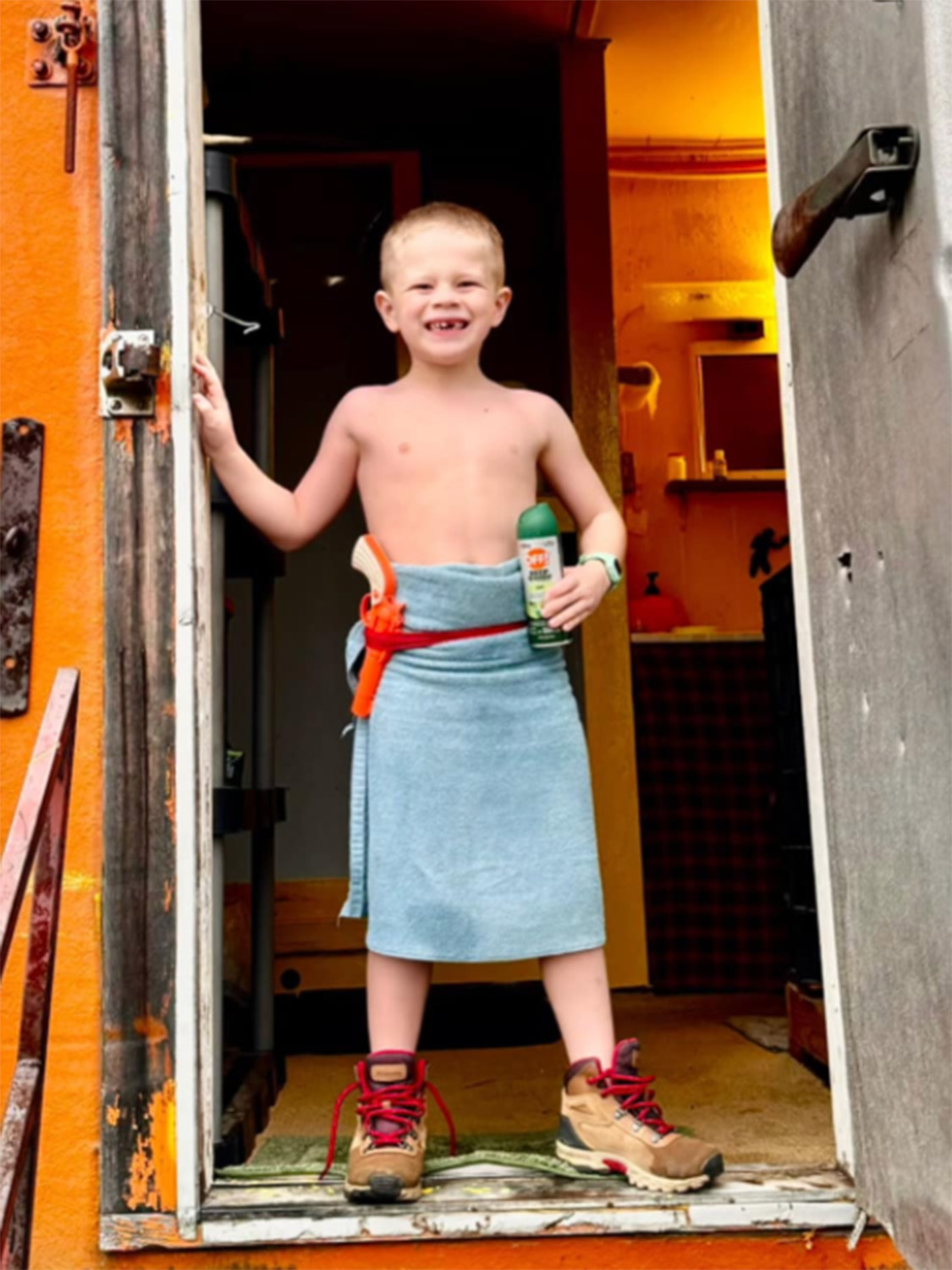
No running water at the cabin. A river too high and fast to bathe in safely. Six nights.
Before you smell us through the screen, Knox and I developed a surprisingly effective system involving Dude Wipes, bottled water and lavender essential oil. It wasn’t especially hot, so we weren’t sweating much, and honestly it worked. The lavender isn’t some Arctic survival technique. We’ve used oils at home since Knox was little, mostly because we like the way they smell, and after several days without a shower, smelling pleasant is enough of a therapeutic claim for me.
If there was a bear in the woods, he got an unfortunate show most mornings, because bathing happened on the porch. Fortunately the porch faced away from Sue’s cabin. Otherwise she would have had a direct view of the great southern ape and his ape-ling scrubbing and defleaing each other at first light.
The strange part is that Kavik had showers. The remote Arctic camp you could only reach by bush plane had hot running water. The cabin we could reach by truck did not.
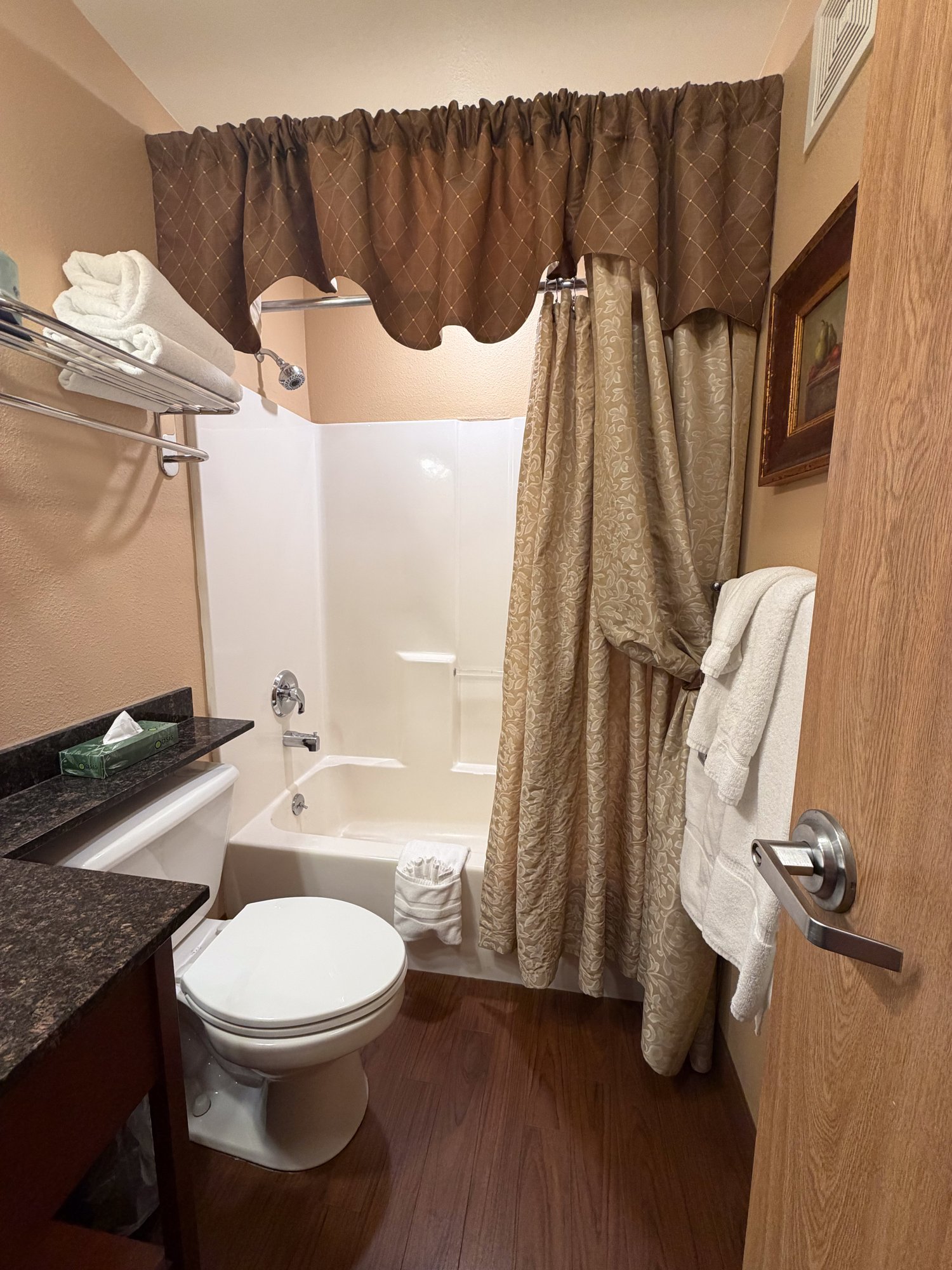
Catherine had wisely booked us a few hours in a room at Pike’s Lodge in Fairbanks. Not to sleep in. We were flying out that night. She booked a hotel room for the sole purpose of allowing two people to bathe in it and then leave, which I want to say plainly is one of the great acts of service in the history of our marriage. We didn’t technically need it. Humanity needed us to have it. After six nights, neither of us was willing to subject a plane full of people to whatever the Axe body spray had failed to conceal.
We reached the hotel and I took a photograph of the bathroom. Beige walls. Shower curtain. Folded towels. An entirely ordinary hotel bathroom.
It was the most beautiful thing I had ever seen.
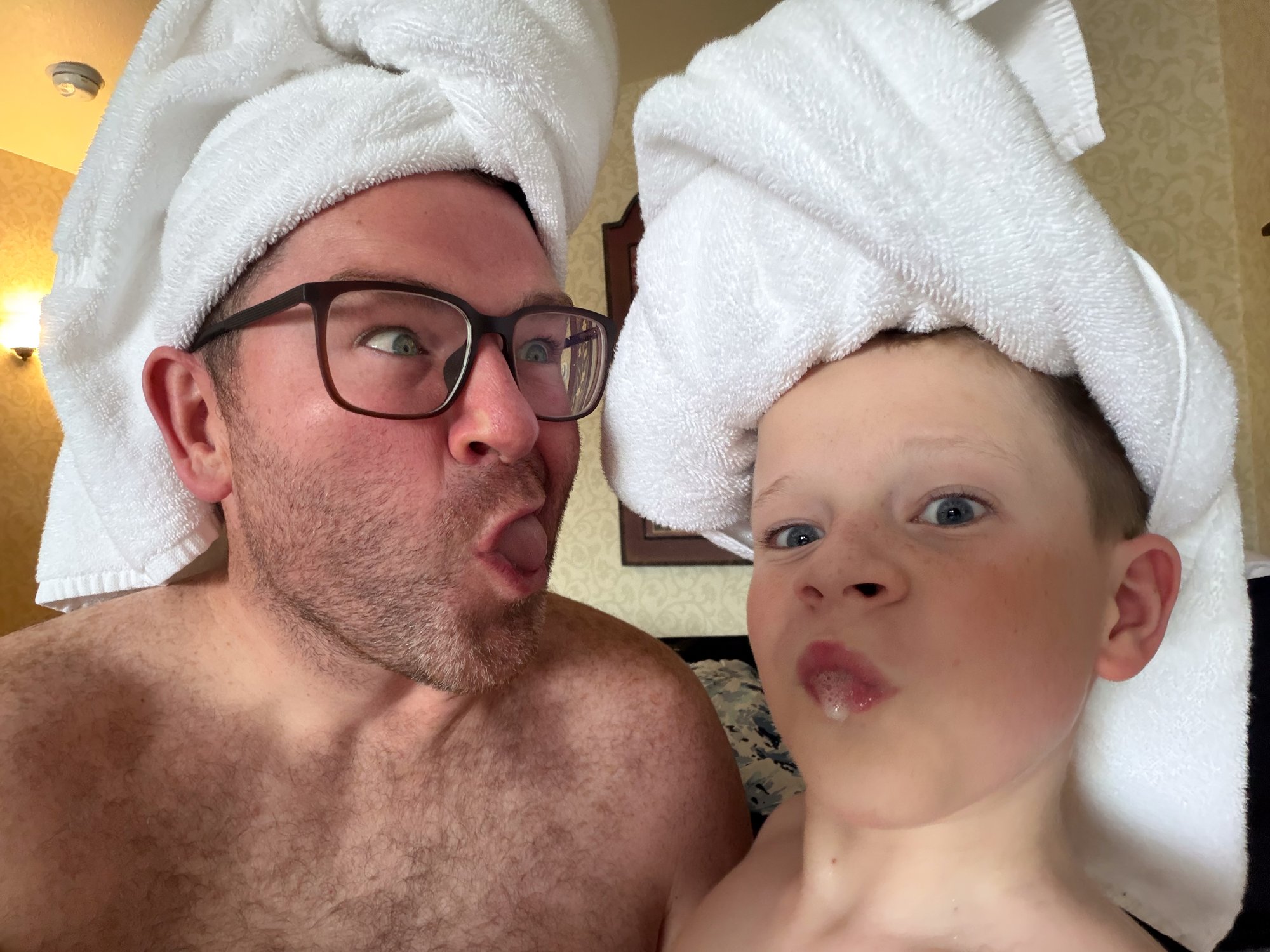
We each took a bath and then a shower. One to soak the week off, one to send it down the drain. Knox emerged freshly scrubbed and thrilled that he had apparently reached the age where deodorant was now part of the program, and he carried around a Dr. Squatch stick announcing, “If you need deo, I’m your man.” Which made the rest of us wonder whether he was trying to tell us something.
What Didn’t Come With Us
I’m not going to pretend everything transferred from Kavik to Chena. It didn’t.
Knox wanted to play in the river the way he always did at Kavik, but he couldn’t. The Chena doesn’t have those shallow little branches where he built his rock archipelagos, and rain had the river so deep that we pushed a long stick into it and never touched bottom. No construction program. That was a legitimate loss to a nine-year-old.
At Kavik you can see to the horizon, and nothing blocks you. I breathe differently there. I don’t think I’m claustrophobic, but apparently my lungs appreciate knowing they can see forty miles. Chena is beautiful. It cannot compete with that.
I still prefer the scenery at Kavik. Knox was less committed. I love the emptiness. Knox said Chena might actually look better because at Kavik, and I quote, “Nothing out there, it’s just plains.” Same destination, opposite road.
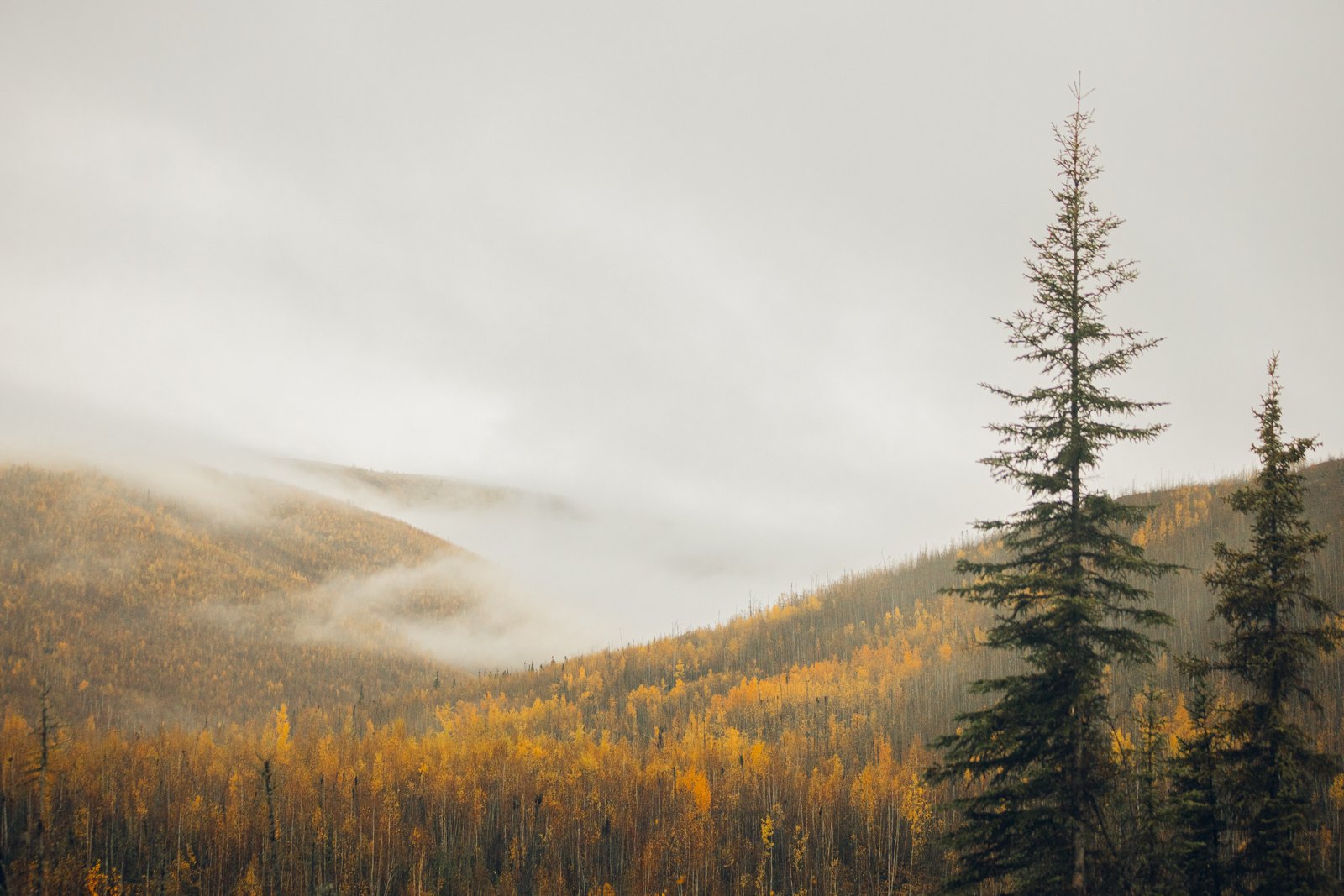
There was something else Chena could never reproduce. I asked Knox about the best day he’d ever had at Kavik, and he thought for a long time and didn’t pick caribou, the bush plane or snow in August. He picked the day the fog rolled in and the plane couldn’t fly and we were weathered in for one extra day. At Chena, the truck comes rain or shine. At Chena, we weren’t waiting on a bush plane to take us home. The best day of his three summers at Kavik is structurally impossible at Chena.
Some things are gone. I think it matters to say that plainly. Not everything needs to be reframed into a blessing. Some things end and we miss them because they were good.
When I asked Knox what the hardest part of Chena had been, his answer was one word.
“Leaving.”
What Did Come With Us
Walking through the woods one afternoon, Knox and I noticed something at almost exactly the same moment. The ground. Spongy, wet, soft beneath your boots. Exactly like the tundra.
Five hundred miles apart. One place above the tree line, one buried in forest, and somehow your feet don’t know the difference. The view changed completely. The ground didn’t.
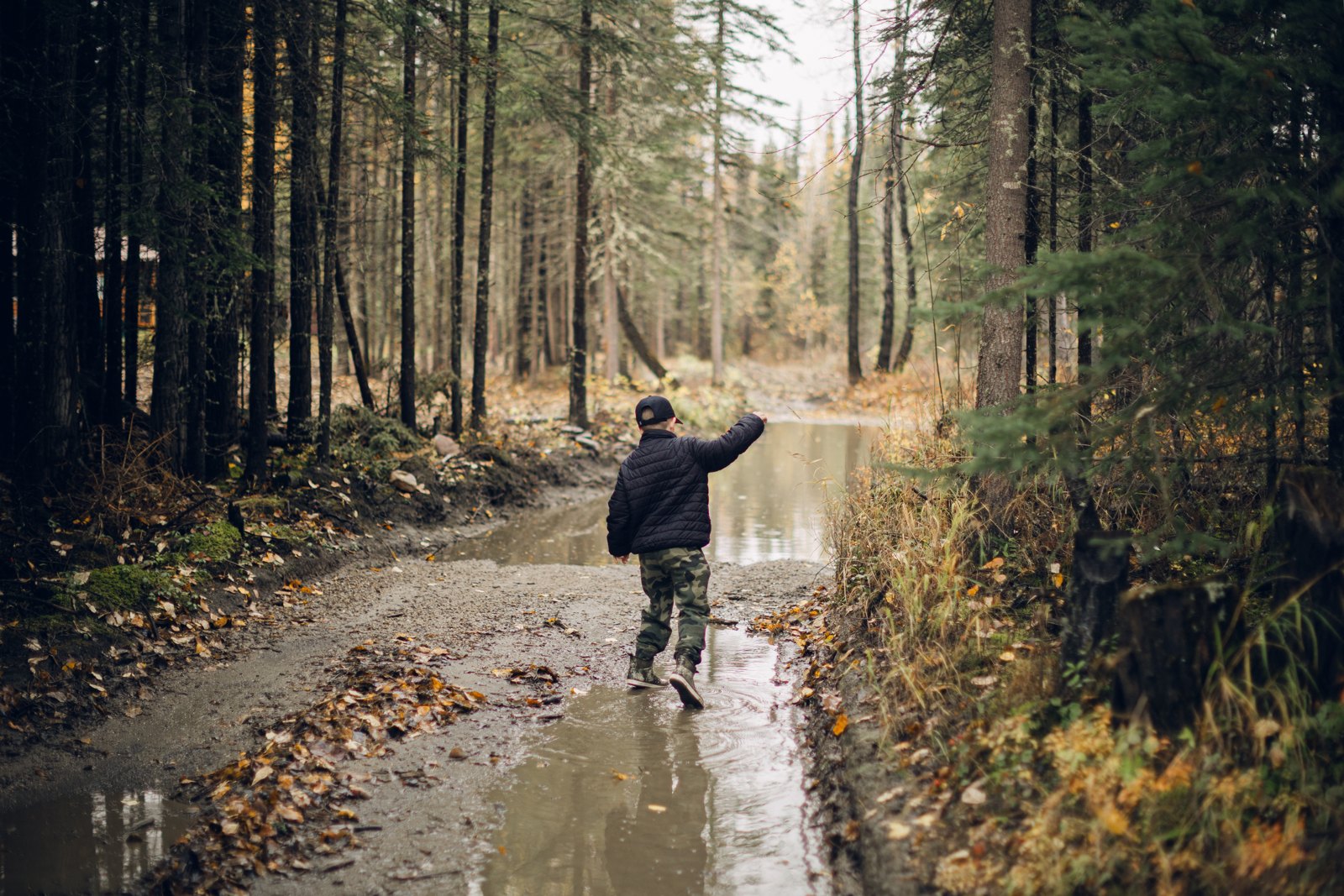
Then I started noticing other things. At Kavik, life happened in the dining hall, where people sat around drinking coffee and telling each other what happened that day. At Chena, it happens in Sue’s living room. Different walls, same room.
Ask Knox what he loved about the trip and he doesn’t start with Alaska. He starts with people.
“I love Sue and Irene because they are generally nice people who care about me.” “I love Chena because of the people.” “I like the slow starts when you wake up.” “My favorite time is hot chocolate with everyone in the morning.” “My favorite meal was the caribou tacos.”
Then he said, “I feel like I can just be me here.” That stopped me.
Ask what he’s going to tell his friends and you’ll get a different report.
“We saw a wolf. We’re still alive.” “We found a whole bunch of mushrooms.” “Found the quartz.” “Found some spruce stuff that looked like a saguaro cactus.” “The stump that was gnawed on by a beaver.”
Both lists are true. One is what a nine-year-old tells the playground. The other is what he told his father in a dark cabin. I know which one I’m keeping.
I went north worried a place with trees couldn’t do what a place without them had done. I was measuring the wrong thing. We didn’t go back for tundra, not really. We went back for the woman who makes your coffee before you’re awake because she watched what time you got up four mornings in a row. We went back for the room where everybody tells each other what happened that day. For neighbors who already know your son’s hot-chocolate order before meeting him. For someone who hears you casually say your kid should drink something besides Sunny D and then goes into the kitchen and solves it without mentioning it again. We went back for the people who let a nine-year-old be entirely nine.
The landscape got smaller. Our belonging got bigger. Somewhere over three summers, we had stopped being visitors, and it took losing the place to notice.
The landscape got smaller. Our belonging got bigger.
Where We Had Been Standing the Whole Time
There was one last detail I couldn’t stop thinking about. The little cabin where Knox and I slept all week, the one with the bank-vault door, the bucket, the shutters and the porch where the great southern ape and his ape-ling conducted their wilderness hygiene program, is the cabin Sue stayed in as a girl. The one she writes about in North of Ordinary.
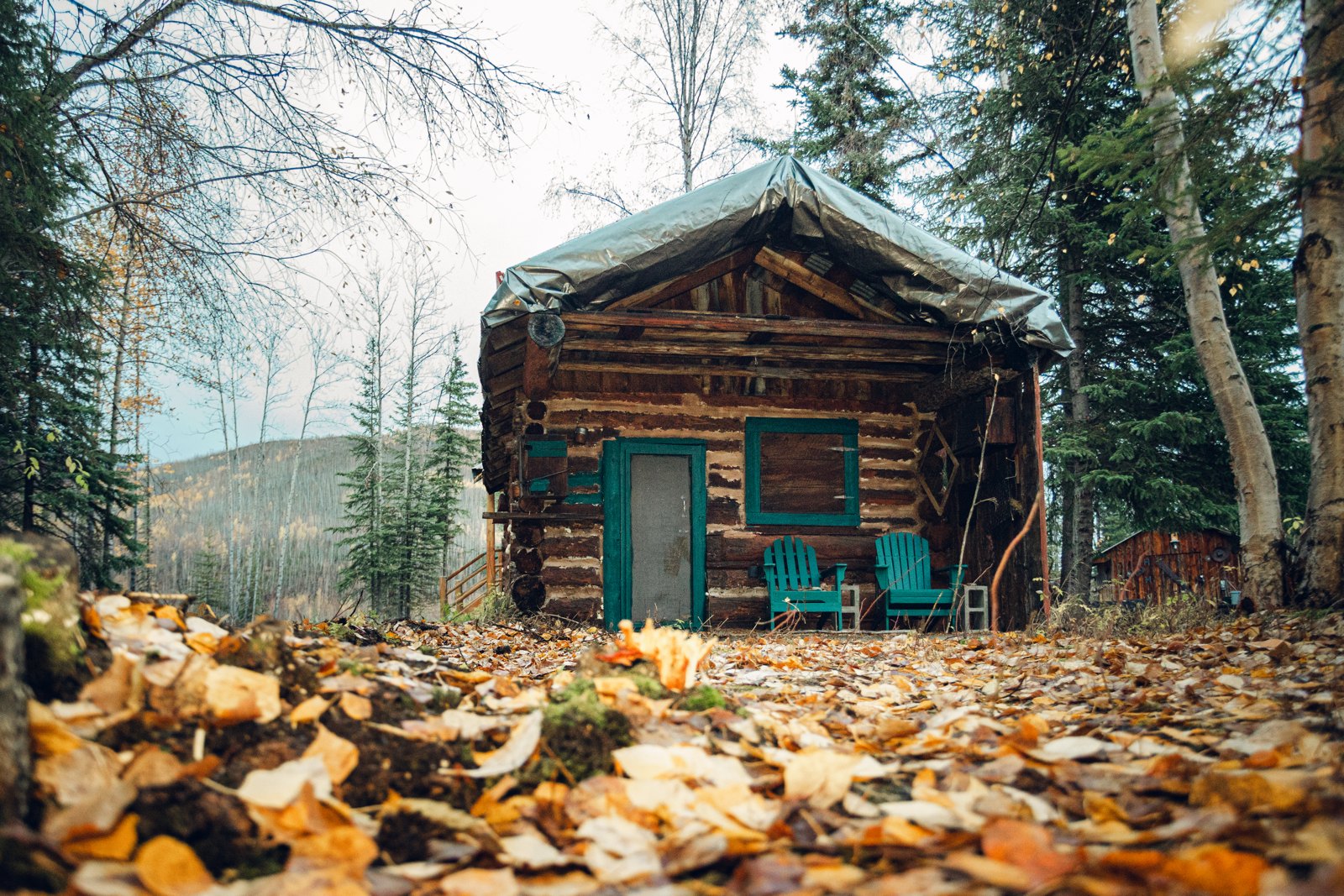
I won’t tell that story here because it isn’t mine. If you want to know how a girl on the Chena Hot Springs Road ends up spending decades running Kavik River Camp on the North Slope of Alaska, she has written it herself, and she tells it better than I ever could. The book is out now, and she earns more from it there than anywhere else.
But I kept thinking about the symmetry. Sue had brought Knox into the place where she built her adult life, and now, after Kavik, she had brought him into a place from her childhood. One childhood handed something to another. Neither child exists anymore in exactly the form that first knew those places. And yet there we were, sleeping in the same cabin, drinking hot chocolate in the morning, leaving muddy boots by the door.
Maybe that’s how places survive after all.
Kavik Was Never Supposed to End Before Knox Grew Up
This is the part I couldn’t say when the text first came.
Kavik was never supposed to end before Knox grew up. In my head there were more summers. Another plane landing. Another run across the gravel. Another picture beside the Twinkies. Another year where I could stand in roughly the same place and see how much taller he’d gotten. I assumed the place would stay still while he changed.
Parents make this mistake all the time. We quietly assign permanence to the background. The house will be there. Grandma’s kitchen will be there. The ranch will look the same. The Christmas tradition will happen again. There will be another summer, another baseball season, another bedtime story, another morning when they crawl into your bed. Then one day you realize there wasn’t, and nobody told you the last one was the last one.
The final time we left Kavik, we didn’t stand on the runway and say goodbye to eight-year-old Knox. We got on the airplane. Because why would we? We thought we’d be back.
That’s the whole thing. You almost never recognize an ending while you’re standing inside it. Maybe that is merciful. If we understood every last time while it was happening, parenting would be unbearable. You’d never make it through breakfast.
You almost never recognize an ending while you’re standing inside it.
Come Back When You’re Hungry
The first time I tried to explain what Kavik had done to us, I wrote about the world I remembered from childhood. Long summer days. Being unreachable. Going outside and coming back when you’re hungry. I thought the tundra had somehow given Knox access to that world, and maybe it did. But after Chena, I think I understand something else.
We did come back hungry. Just not for what I thought.
We were hungry for mornings without hurry, for people who listen, for work that uses your hands, for stories told in rooms where nobody is looking at the clock. We were hungry for somebody who already knows how you take your coffee and for the freedom to let a child wander far enough to discover something but close enough that he knows where home is.
Kavik gave us that. Then Kavik ended. And we found it again in a cabin in the woods.
Not because the Chena River is secretly the Kavik River. Not because a spruce forest is the tundra. Not because one place replaced another. It didn’t. It couldn’t. We found it because Sue was there. And Irene. And neighbors who brought hot chocolate, and a mushroom expert, and a fishing surgeon. And because nine-year-old Knox showed up ready to become whoever nine-year-old Knox is supposed to be.
That’s the part I almost missed while looking backward for the six-year-old.

Home
We left Fairbanks on Tuesday, September 22, at 8:22 at night. Chicago early the next morning, then Houston, where it was around a hundred degrees and Texas had apparently accomplished nothing useful during our absence. Knox did schoolwork on the plane and between adventures, which is one of the reasons we homeschool in the first place. I’d put a week of felling trees, foraging mushrooms, cleaning grouse, learning to cast, watching water, identifying tracks and realizing a wolf may be denning behind your bedroom up against plenty of curricula.
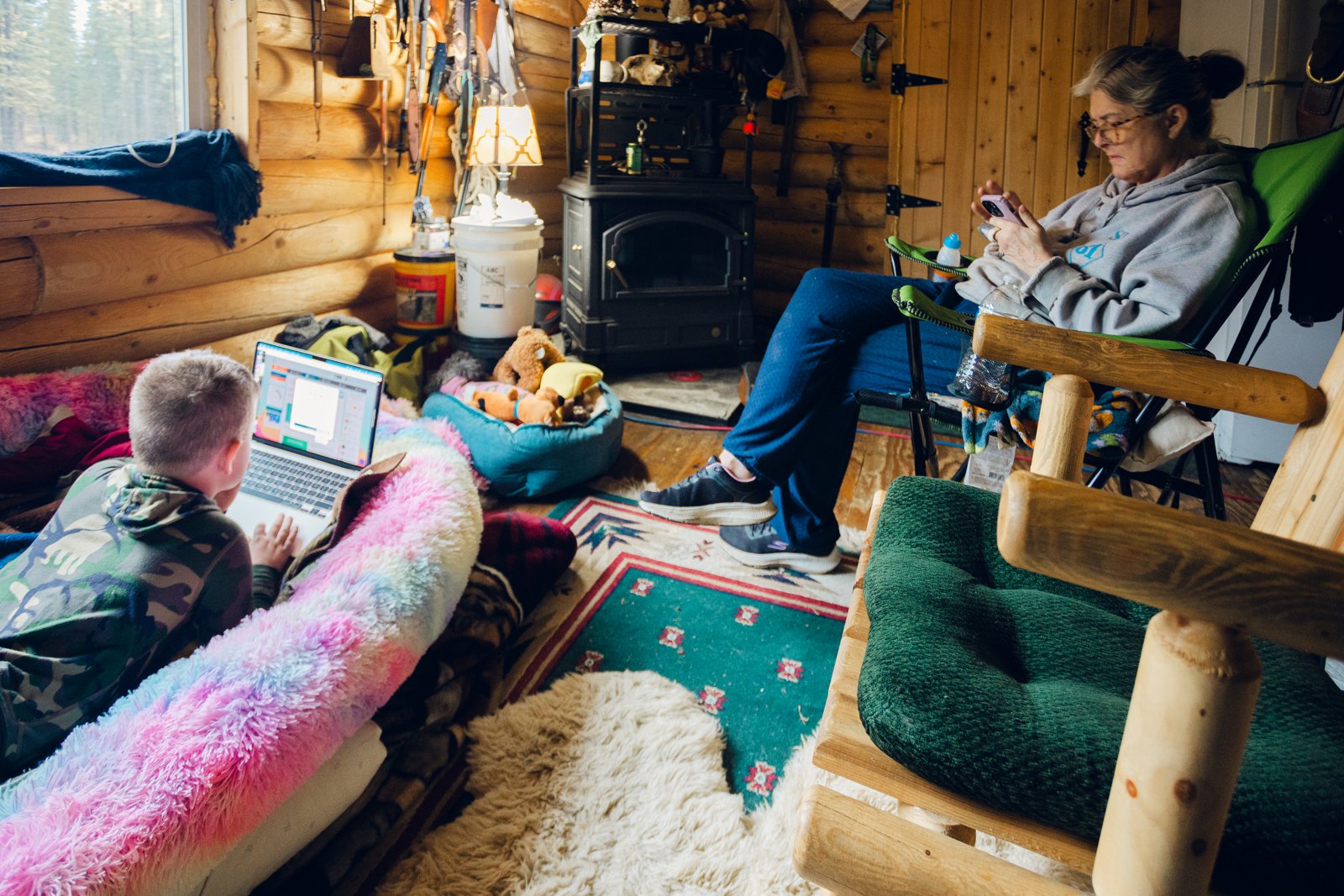
Then we were home. The Brahman cows still needed working. Emails waited. Nothing at the ranch had stopped because we went north.
That’s ranching. Seasons end. Calves grow. Cattle sell. Pastures change. People leave. Places change hands. If you’ve spent your life in agriculture, you learn early that loving something does not grant you ownership of it forever. You also learn the other half, which is that its ending doesn’t undo the years you had it.
Wharton County, where our ranch sits, produced a playwright named Horton Foote. He wrote The Trip to Bountiful, about an old woman desperate to return to the Texas town she came from. She finally gets there. The place is mostly gone and the house is falling apart. For years I thought the ending was about accepting that things disappear. I don’t think that anymore. I think it is about realizing we are often wrong about what we have been trying to get back to.
I thought we were going back to Alaska because of Kavik. Then Kavik wasn’t there for us anymore, so we went anyway. And there was Sue. There was hot chocolate. There was laughter. There was a nine-year-old chopping down a tree entirely too large for him, and a white wolf walking through the place where we’d spent the week, and dishes from another chapter of his life wrapped in a pillowcase.
What we loved had moved. So had we.
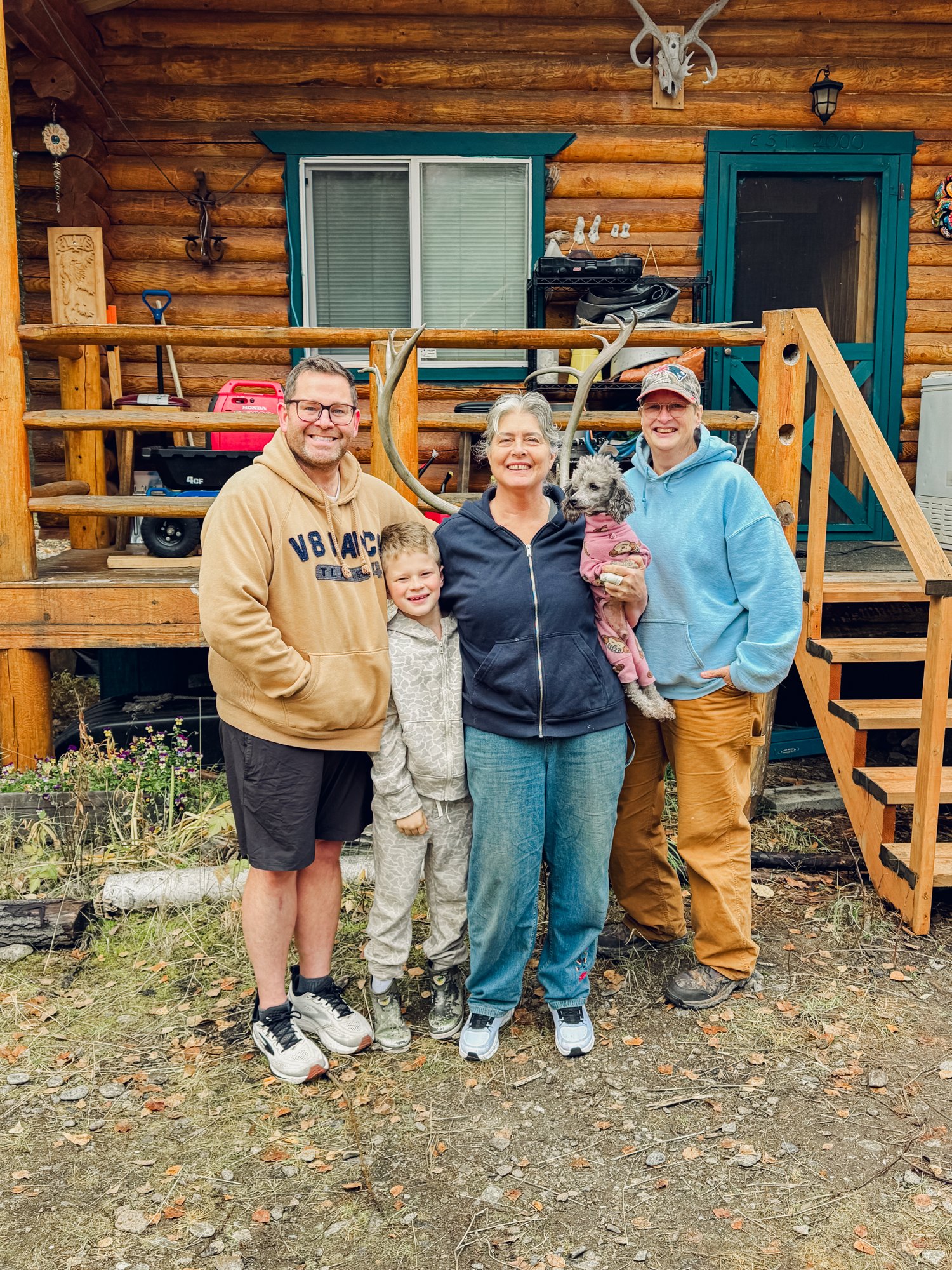
The plates are in Texas now, along with the mug. Sue’s handwriting says Kavik Knox on the side, and I’m looking into having it reproduced before years of washing finally erase it.
I asked Knox where he planned to keep the dishes. I expected something ceremonial. Maybe his room. A display shelf. Some protected place where no one could break them. He looked at me like I’d asked where we store forks.
“I don’t know. Regular dish cabinet.”
Of course. Because to him they’re plates. He’s still living the story. I’m the one standing far enough away to see what they mean.
Someday he may understand. Maybe he’ll be twenty-five and open that cabinet. Maybe he’ll be forty and those plates will somehow have survived moves, marriage, children and whatever else life does to a person. Maybe he’ll pull one out and remember hot chocolate. Maybe he’ll remember the gravel. Maybe he won’t. That’s okay too.
Parents spend a lot of time trying to preserve versions of children who have no obligation to remain preserved. Our job isn’t to keep them little. Our job is to love each one while he’s here, and then meet the next one.
Six-year-old Knox is gone. Seven-year-old Knox too. Eight-year-old Kavik Knox got on an airplane one summer without knowing he would never come back. Nine-year-old Knox went to Chena instead. I miss every one of them, and I love the one sitting beside me now.
Our job isn’t to keep them little. Our job is to love each one while he’s here, and then meet the next one.
Someday, if everything goes exactly right, this one will leave too. He’ll build a life that doesn’t revolve around us. He’ll have people and places and stories that belong to him instead of me. That is the assignment. It is also, apparently, the heartbreak.
Until then, we’ll eat breakfast off the plates.
Regular dish cabinet.
Exactly where they belong.
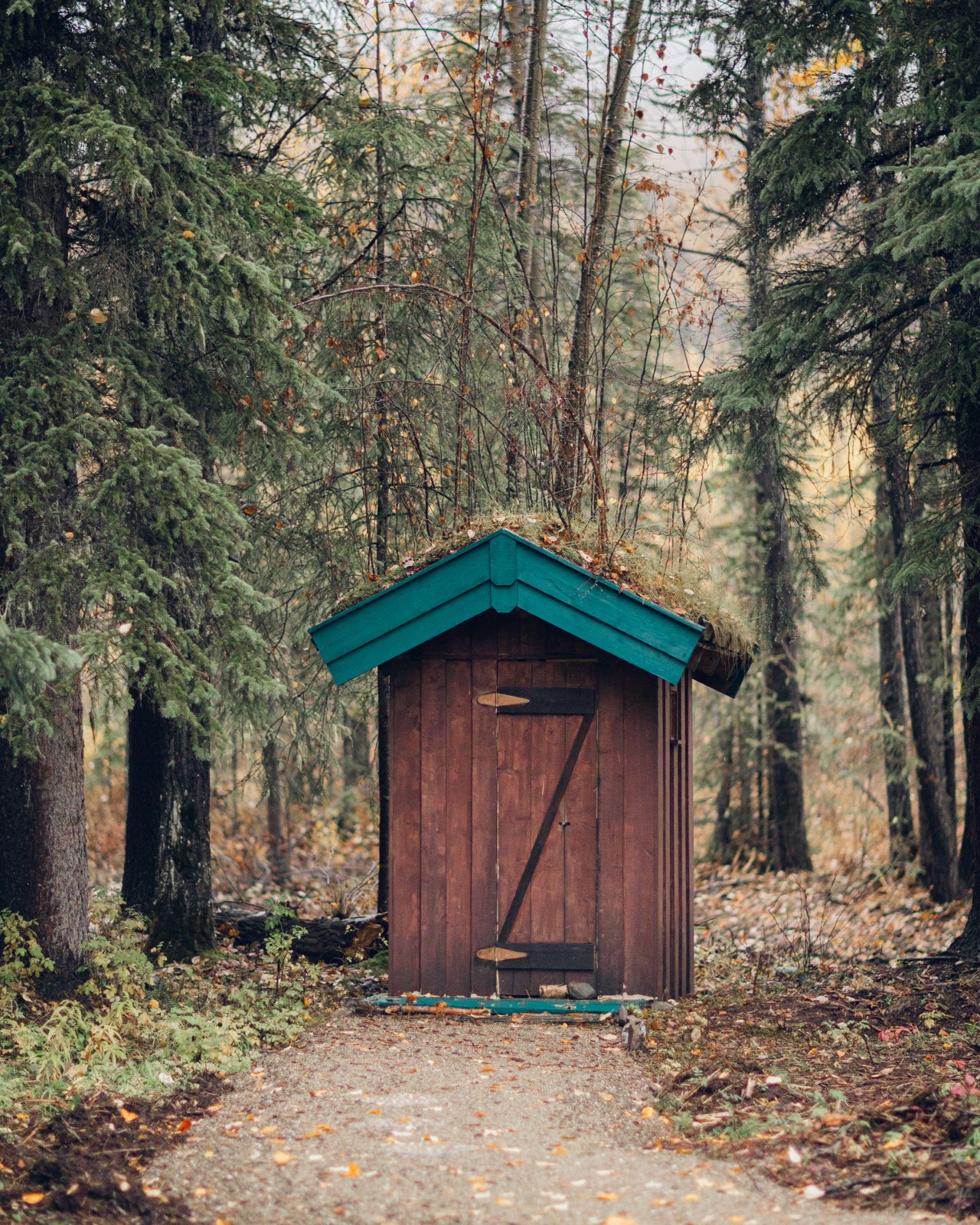
The week in photographs
Six nights at Chena
Everything the essay did not have room for. Click any frame.
The Alaska series
Four summers, one friendship
Each trip got its own write-up. Read together they are a record of a boy at six, seven, eight and nine, in a place that turned out to be less permanent than he was.
- 2023Knox is 6Back to School at a Brahman Show Cattle Ranch
The first trip. A six-year-old meets the Arctic, and his father finds out what the North Slope does to a person.
- 2024Knox is 7Tundra Tales: A Father-Son Adventure in Kavik
Caribou, August snow, and a boy who had decided the Arctic belonged to him.
- 2025Knox is 8Brahman Cattle Ranchers Alaska Trip 2025: Kavik Camp
Blueberries in the midnight sun, a polar bear, and the day the fog came in and the plane could not fly.
- 2026The argumentWhy I Keep Going Back to Kavik River Camp
Not a trip. The essay about what the tundra gives back to a generation that grew up before the algorithm.
- 2026Knox is 9Kavik Was Never Supposed to End Before Knox Grew Up
Kavik is no longer Sue's. We went to Chena instead, and found out what we had actually been going for.
You are here
Questions people actually ask
Kavik, Sue, and what happened in 2026
What happened to Kavik River Camp?
Sue Aikens announced on 20 July 2026 that Kavik River Camp is no longer in her possession. Those are her words. She has said the details involve her and several corporate entities, that it breaks her heart, and that she does not intend to discuss it further. A corporation operates the camp now, and the animals were left in their natural state.
Where is Sue Aikens now?
At her cabin on the Chena Hot Springs Road outside Fairbanks, Alaska. We stayed with her there for six nights in September 2026, from the 16th to the 22nd. The Chena experiences described here were witnessed first-hand during that week.
Who is Sue Aikens?
Sue ran Kavik River Camp, a remote outpost on Alaska’s North Slope roughly 500 miles north of Fairbanks, for more than two decades. She is one of the central figures on National Geographic’s Life Below Zero. She has been our friend for four years, and family for most of that.
Does Sue Aikens have a book?
Yes. North of Ordinary is out now. She earns more from Mystery Control than from the large retailers, so that is where we send people. It covers the childhood cabin we slept in during this trip, among a great deal else.
How do you get to Kavik River Camp?
You fly commercial into Fairbanks, then charter a bush plane north. The flight takes roughly two hours over the Yukon River, through the Brooks Range, and out across the North Slope. There are no roads in and no roads out.
Can you still visit Kavik River Camp?
We do not know, and we are not going to guess. The camp changed hands in 2026 and visits previously happened directly through Sue. If that has changed, it is not our news to report.



0 Comments